Category: Guides

  • The Cooper Fitness Test: How to Measure Your Aerobic Capacity in 12 Minutes

    The Cooper Fitness Test: How to Measure Your Aerobic Capacity in 12 Minutes

    The Cooper Fitness Test, often simply called the Cooper Test, is a classic physical fitness test designed to assess your cardiovascular fitness and aerobic endurance. Developed in 1968 by Dr. Kenneth H. Cooper, a pioneer in preventative medicine, this test is a simple yet effective way to measure cardiovascular endurance, which is widely considered the most important of the 5 health-related components of physical fitness for a long life. It’s a field test, meaning it doesn’t require the sophisticated equipment of a laboratory treadmill test, making it accessible for large groups or individuals.

    The premise is straightforward: you run or walk as far as possible in 12 minutes. The total distance covered is then used to estimate your VO2 max, which is a key indicator of your aerobic fitness.

    Because of its simplicity and high correlation with laboratory-based measurements of oxygen uptake, the Cooper 12-minute run test has been widely used by coaches, military organizations, and trainers to evaluate the fitness level of individuals and track their training progress over time. It is a maximal test, requiring you to put forth your best effort to get an accurate gauge of your current fitness.

    A silver analog stopwatch displaying exactly 12:00 minutes sitting on a red textured running track next to the toe of a blue and grey athletic sneaker.
    The 12-minute benchmark: In the Cooper Test, the total distance covered when the clock hits zero is used to determine your aerobic capacity and overall cardiovascular health category.

    The Science Behind the Test: VO2 Max

    The core scientific concept behind the Cooper Test is maximal oxygen consumption, commonly known as VO2 max. VO2 max is the maximum amount of oxygen your body can use during intense exercise. It is widely considered the gold standard of cardiorespiratory fitness.

    A higher VO2 max indicates a more efficient heart and set of lungs, which can deliver more oxygen to your working muscles, allowing you to perform strenuous exercise for longer periods.

    Directly measuring VO2 max requires expensive treadmill testing in a lab with specialized gas analysis equipment. However, the Cooper Test provides a means of assessing maximal oxygen intake through a field test.

    Extensive research, including meta-analysis and systematic review studies, has shown a high correlation between the distance covered in a 12-minute run and laboratory-measured VO2 max. By inputting your test distance into a specific formula or using a cooper test calculator, you can obtain a fairly accurate estimate of your maximal oxygen consumption. This makes it a valuable tool for assessing physical fitness without the need for a clinical setting.
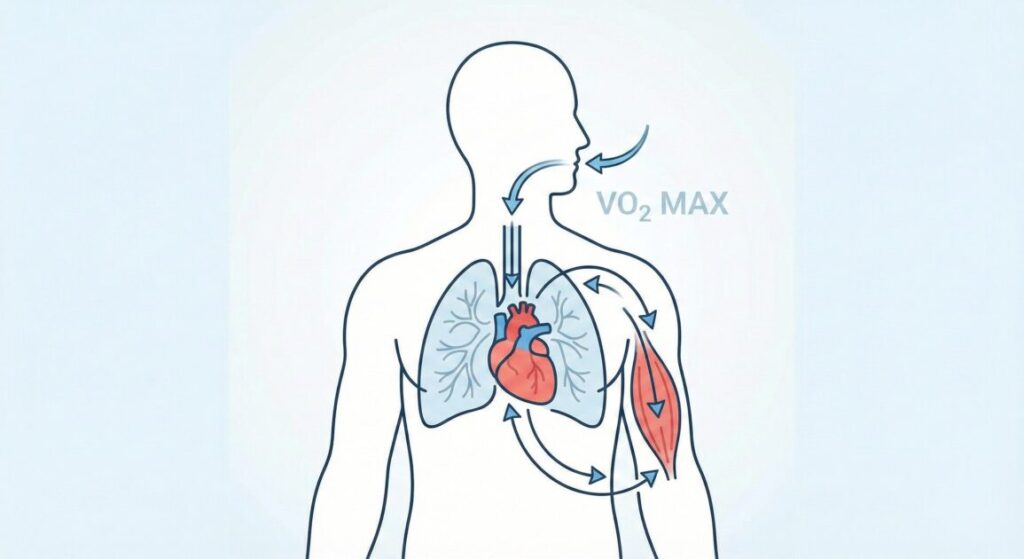
    A medical illustration showing the pathway of oxygen ($VO_2$ Max) through the human body, from inhalation into the lungs to circulation by the heart and delivery to the working muscles.
    The science of stamina: $VO_2$ Max represents the maximum amount of oxygen your body can utilize during intense exercise, serving as the gold standard for measuring cardiovascular endurance.

    How to Perform the Cooper Test

    Performing the Cooper Test is straightforward but requires preparation and maximum effort. The most suitable venue is a standard 400-meter running track, which allows for precise measurement of the distance covered. You’ll need a stopwatch to time the 12-minute duration accurately.

    Before you begin, a proper warm-up is crucial. Spend 10-15 minutes performing light jogging, dynamic stretches, and some short strides to prepare your muscles and cardiovascular system. Once you are ready, start the stopwatch and begin running.

    The goal is to cover the maximum possible distance in 12 minutes. Pacing is key; you don’t want to start with a sprint and burn out, but you also don’t want to finish with too much energy left. An experienced runner will aim for a steady, challenging pace.

    If you are less experienced, it’s perfectly acceptable to alternate between running and walking, but keep in mind this is a test of your maximal aerobic capacity, so push yourself.
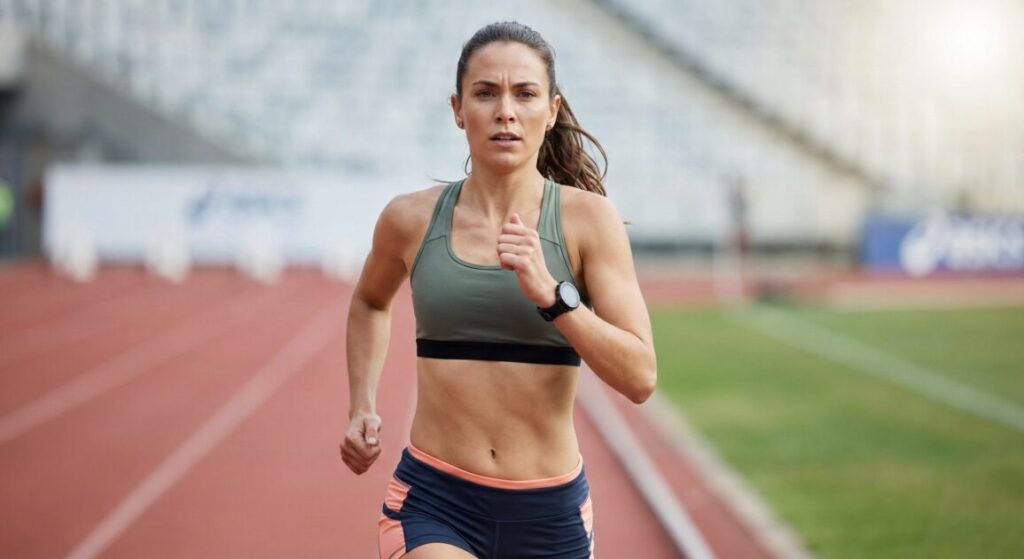
    A female athlete with a ponytail, wearing an olive green sports bra and black-and-pink shorts, running on a red all-weather track in a stadium.
    The 12-minute challenge: The Cooper Test is a classic assessment of cardiovascular endurance that requires participants to run as far as possible in 12 minutes to estimate their aerobic capacity.

    When the 12 minutes are up, stop immediately and mark your exact location. Then, calculate the total distance you covered. If you’re on a track, you can easily do this by counting your laps and adding the final partial lap.

    Record the distance in either kilometers or miles. After the test, perform a cool-down with a slow recovery jog and static stretching to help your body recover.

    Interpreting Your Test Results

    Once you have your total distance, you can interpret your Cooper test results to understand your cardiovascular fitness level. The distance you covered can be plugged into a formula to estimate your VO2 max.

    One common formula for calculating VO2 max (in ml/kg/min) from the distance in kilometers (d) is: VO2 max = (22.351 x d) – 11.288. Alternatively, you can use a formula based on miles.

    Your calculated VO2 max or the raw distance can then be compared to normative data tables. These tables categorize fitness levels from “Very Poor” to “Superior” based on your age and sex. For instance, a 25-year-old male covering 2.8 km might be in the “Excellent” category, while the same distance for a 50-year-old male would be considered “Superior.”

    It’s important to remember that while the Cooper test is a well-regarded physical fitness test, it provides an estimate. Factors like your running experience, pacing strategy, motivation, and even the weather can influence your score. For a more precise measure, a laboratory-based treadmill test is required. However, for tracking your own training progress or for use by coaches to assess large groups, the Cooper test results are a valuable and quite accurate tool.

    A person’s hands holding a black tablet that displays a fitness data chart and a results table for the Cooper Test, showing $VO_2$ Max estimates and fitness categories based on age and sex norms.
    Analyzing your performance: Standardized Cooper Test results allow you to compare your distance and estimated $VO_2$ Max against global age and sex norms to determine your current fitness level.

    Improving Your Cooper Test Score

    If your Cooper test results show room for improvement, the good news is that aerobic fitness is highly trainable. To improve your Cooper test score, you need to focus on increasing your body’s ability to transport and use oxygen. This is primarily achieved through consistent endurance training.

    A well-rounded training plan should include a mix of steady-state runs, which build your aerobic base, and more intense sessions like interval training. Interval training, where you alternate between periods of high-intensity running (like a sprint or a fast per-mile pace) and recovery jogs, is particularly effective at boosting VO2 max. For example, you might run hard for 3 minutes, then jog for 2 minutes, and repeat this cycle several times.

    Consistency is key. Aim for at least 3-4 sessions of aerobic exercise per week. As your fitness improves, you can gradually increase the duration and intensity of your workouts. It’s also beneficial to incorporate other forms of cardio, like cycling or swimming, to improve your overall cardiorespiratory fitness without the high impact of running.

    By following a structured training program, you can expect to see a significant improvement in your Cooper test score and your overall aerobic endurance. You can re-take the Cooper test every 6-8 weeks to track your training progress.

    A male athlete in a grey t-shirt and black shorts explosively sprinting on a red running track, with several other runners in the background and a coach holding a stopwatch.
    Pushing the limit: Physical assessments like the Cooper Test provide an objective benchmark of your current athletic performance, allowing you to tailor your training for maximum improvement.

    The Cooper Fitness Test remains a classic and valuable tool for assessing aerobic fitness. Its simplicity, requiring only a stopwatch and a place to run, makes it accessible to everyone from the casual exerciser to the elite athlete.

    By measuring the distance you can cover in 12 minutes, you gain a powerful insight into the efficiency of your cardiovascular system and an estimate of your VO2 max.

    Whether you are looking to establish a baseline for a new training program, track your progress over time, or simply see where you stand compared to age and sex norms, the Cooper Test provides a practical and reliable benchmark. With consistent endurance training, you can improve your score, enhance your cardiorespiratory health, and enjoy the many benefits of a fitter, more resilient body.

  • Fitness Coach vs. Personal Trainer: Which Pro is Right for Your Goals?

    Fitness Coach vs. Personal Trainer: Which Pro is Right for Your Goals?

    When embarking on a fitness journey, one of the most important decisions you’ll make is selecting the right professional to guide you. You’ve likely encountered the terms fitness coach and personal trainer used interchangeably, but they are distinct roles.

    While both are dedicated to helping you reach their fitness goals, they employ different methodologies and scopes of practice.

    A personal trainer is a certified professional who primarily focuses on physical training, whereas a fitness coach takes a holistic approach that encompasses broader lifestyle factors.

    This article will break down the key differences to help you choose the best partner for your health and wellness goals.

    What is a Personal Trainer?

    A personal trainer is a fitness professional who specializes in designing and implementing customized exercise programs. Their primary focus is on the physical aspect of your health and fitness, helping you improve your physical fitness through structured workout sessions.

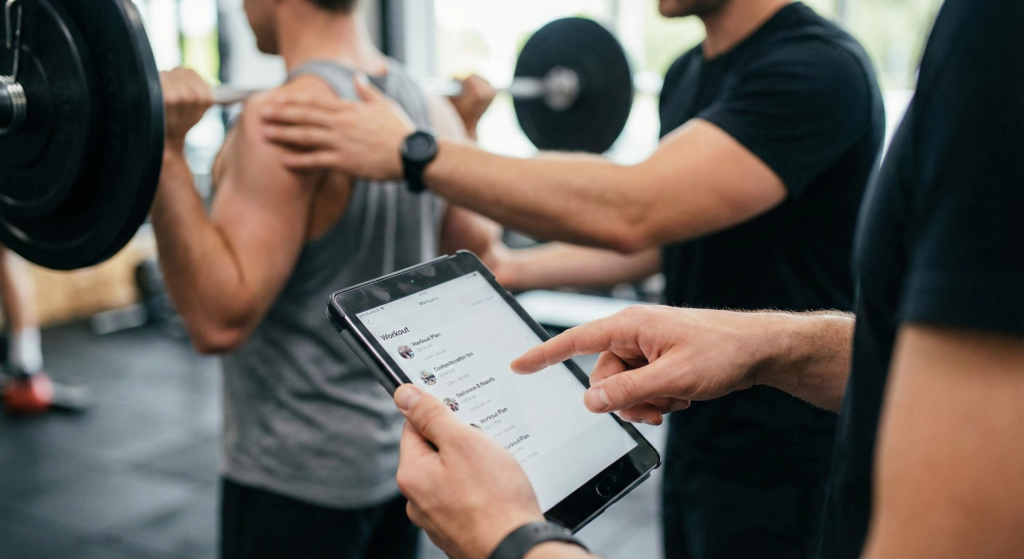
    A personal trainer instructing a client on proper exercise form in a gym setting, representing the hands-on guidance typical of the profession.
    Understanding the Difference: Is a fitness coach or a personal trainer better for your journey?

    Focus and Scope of Practice

    The role of a personal trainer is the right fit for individuals seeking targeted physical improvements. Personal trainers focus on the mechanics of exercise, ensuring you perform movements correctly to maximize results and minimize injury risk.

    Their expertise lies in anatomy, physiology, and exercise science. They assess your current fitness level and create a plan that might include strength training, cardiovascular exercise, and flexibility work to help you achieve their specific fitness goals.

    Typical Sessions and Interactions

    In a typical training session, a personal trainer will lead you through a workout, providing real-time feedback on form, technique, and intensity. They are there to motivate you, push you past your perceived limits, and track your progress in terms of reps, sets, and weight lifted.

    Personal trainers typically work in a gym setting, and their interaction with you is primarily during these scheduled sessions, with a strong emphasis on the “how” of exercise.

    What is a Fitness Coach?

    A fitness coach, often referred to as a wellness coach or health coach, takes a broader view of your well-being. While they possess fitness knowledge, a fitness coach focuses on the integration of exercise into your overall lifestyle, addressing behavioral changes and mastering a positive fitness mindset.

    A fitness coach and client sitting together reviewing a digital tablet, representing the strategic, holistic, and lifestyle-planning aspect of fitness coaching.
    Beyond the Gym: Fitness coaching focuses on long-term strategy, nutrition, and lifestyle habits.

    Holistic Approach to Health

    The main difference is that a fitness coach takes a holistic perspective. They understand that health and well-being are influenced by more than just workouts. A coach takes into account your nutrition, sleep habits, stress levels, and daily routine.

    They work with you to identify barriers to change and develop sustainable strategies for long-term health. This approach is particularly beneficial for fitness goals such as weight loss, which often requires a multi-faceted lifestyle shift.

    The Coaching Relationship

    The relationship with a fitness coach is more consultative and collaborative. A coach can help you set realistic goals, develop a plan of action, and provide ongoing accountability and support. Fitness coaches often work with clients outside of a gym setting, through calls, video chats, or in-person consultations. Their goal is to empower you to make healthier choices independently, fostering self-efficacy and lasting behavioral change.

    Key Differences at a Glance

    To clarify the personal trainer vs fitness coach distinction, here is a summary of their primary differences.

    FeaturePersonal TrainerFitness Coach
    Primary FocusPhysical training, exercise technique, workout program designHolistic health, lifestyle changes, mindset, behavioral coaching
    ScopeSpecific physical goals (strength, endurance, muscle gain)Broader health and wellness goals (weight management, stress, habits)
    ApproachDirective, instructional, hands-on during sessionsConsultative, collaborative, focuses on empowerment and guidance
    SettingTypically gym-basedCan be gym-based, office-based, or remote
    InteractionFocused on leading training sessionsFocused on discussions, goal-setting, and accountability

    Both personal trainers and fitness coaches play a vital role in the fitness industry, and many professionals hold certifications in both areas, offering a hybrid approach.

    Similarities and Shared Goals

    Despite their different approaches, coaches and personal trainers share a common mission: to help you improve your health and fitness. Both are passionate health and fitness professionals dedicated to your success.

    Commitment to Client Success

    Whether you choose a trainer or a fitness coach, their ultimate goal is to see you succeed. They are invested in your progress and will adapt their strategies to help you overcome challenges. Both require a deep passion for health and fitness and a genuine desire to help people reach their fitness goals.

    Foundations in Fitness Science

    While their application differs, both trainers and fitness coaches need a solid foundation in exercise science and nutrition principles. Many fitness coaches start their career as a personal trainer and evolve into coaching to offer more comprehensive support.

    Conversely, personal trainers must stay updated on the latest fitness knowledge to provide effective and safe training.

    Choosing the Right Professional for You

    Deciding between a personal trainer and a fitness coach depends on your individual needs, preferences, and goals.

    When to Choose a Personal Trainer

    A personal trainer is the right choice if:

    • Your primary goal is to improve physical performance, build strength, or learn proper exercise technique.
    • You need the structure and motivation of guided, in-person workouts.
    • You are looking for a fitness instructor to lead training sessions and ensure you are pushing yourself safely.
    • You have specific, performance-related fitness goals.

    When to Choose a Fitness Coach

    A fitness coach is the better option if:

    • You are looking to make sustainable lifestyle changes beyond just exercise.
    • You need help with goal setting, accountability, and overcoming mental barriers.
    • Your goals are related to overall wellness, long-term health, or weight management that requires a holistic approach.
    • You prefer a more collaborative and guidance-based relationship.

    Often, the best solution may be a combination of both fitness coaching and personal training, or finding a professional who is dual-certified. Ultimately, the difference between a personal trainer and a fitness coach lies in their approach, and you can research how much a fitness trainer costs to see which professional fits your budget and shared goal of a healthier life.

  • The Power of Fitness Affirmations: Rewiring Your Mind for a Healthier You

    The Power of Fitness Affirmations: Rewiring Your Mind for a Healthier You

    We have all been there. You set a new fitness goal, buy the gear, and plan your week. The first few days are fueled by excitement, but then the initial motivation fades. The alarm goes off, and instead of jumping out of bed for your fitness routine, you hit snooze.

    A familiar voice in your head starts whispering, “You’re too tired,” “You can’t do this,” or “It’s not working anyway.” This negative self-talk is a formidable opponent, often more powerful than any physical limitation. It is the reason why so many of us struggle to stay consistent and ultimately fall short of our health goals.

    But what if you could silence that inner critic and replace it with a voice that encourages, empowers, and propels you forward? This is where fitness affirmations come into play.

    They are not just feel-good quotes; they are a powerful tool for rewiring your mindset. By consciously choosing positive statements and repeating them, you can transform your entire outlook on your health and fitness journey. Affirmations can be a powerful way to align your mind and body, helping you overcome mental barriers—though sometimes you might need the guidance of a fitness coach or personal trainer to help you achieve your goals.

    What Are Fitness Affirmations and Why Do They Work?

    At their core, fitness affirmations are intentional, present-tense statements designed to influence your subconscious mind. They serve as a tool for cognitive restructuring.

    Unlike a vague wish for the future, an affirmation is a declaration of truth that you choose to believe right now. When you affirm your abilities, you are essentially programming your brain to focus on your strengths rather than your perceived weaknesses.

    The Science of Self-Talk and the Subconscious Mind

    A female hiker sitting on a rocky mountain peak at sunrise, writing in a journal while looking out over a valley filled with clouds.
    Reflective journaling during a hike can turn a physical challenge into a powerful mental breakthrough.

    The reason affirmations work lies in neuroplasticity—the brain’s ability to reorganize itself by forming new neural connections. Your brain is constantly eavesdropping on your internal dialogue. If you are constantly engaging in negative self talk, your brain reinforces those neural pathways, making doubt and fatigue your default setting.

    However, by repeating positive statements, you can override these old patterns. Affirmations can help shift your brain from a state of stress and self-defense to one of confidence and action.

    When you tell yourself “I am strong and capable,” your subconscious mind begins to accept this as reality, prompting you to act in ways that align with that belief. This positive self-talk creates a feedback loop: you think positively, you perform better, you feel better, and your belief strengthens.

    Key Benefits of Incorporating Affirmations into Your Routine

    Adopting a practice of daily routine affirmations does more than just make you feel optimistic; it translates into tangible results in your physical health and overall well-being.

    Boosting Motivation and Consistency

    One of the hardest parts of any exercise regimen is showing up when you don’t feel like it. Workout affirmations act as an internal support system to keep you motivated.

    They remind you of your “why” and help you focus on the long-term reward rather than the short-term discomfort. A simple reminder like “I am building a better me” can provide the spark needed to start your best workout yet.

    Overcoming Mental Barriers and Negative Self-Talk

    The ‘inner critic’ acts as a major obstacle to progress. While affirmations help mentally, many find that working with a professional fitness trainer provides the external accountability needed to break through physical plateaus.

    Whether you are trying to run a mile without stopping or attempting to lift heavier, mental blocks often appear before physical failure.

    Positive affirmation serves as a counter-narrative. It helps you push through the “I can’t” moments, building mental resilience and a positive mindset.

    Cultivating Body Positivity and Self-Love

    A woman sitting in a meditative prayer pose on a yoga mat at a beach during sunset, with a journal containing handwritten affirmations open in front of her.
    Incorporating positive affirmations into your daily routine can help shift your mindset and accelerate your fitness progress.

    For many, a fitness journey is fraught with judgment about their appearance. Self-love is often conditional on reaching a certain weight or look. Affirmations will help you shift the focus from punishing your body to appreciating it.

    By using mindfulness to focus on what your body can do—how it moves, breathes, and lifts—you cultivate a healthier body image. This shift ensures that your health goals are driven by self-care, not self-loathing.

    How to Create and Use Effective Fitness Affirmations

    To make affirmations work for you, they need to be personal and practical. Here is how to craft statements that resonate and integrate them into your life.

    Crafting Your Own Powerful Statements

    Effective exercise affirmations follow a few simple rules:

    • Keep it in the present tense: Say “I am strong,” not “I will be strong.” The subconscious mind responds to current reality.
    • Make it positive: Focus on what you want, not what you want to avoid. Instead of “I won’t quit,” say “I have the endurance to finish.”
    • Make it believable: If “I am an athlete” feels too far-fetched right now, try “I am becoming an athlete.” This helps the statement feel like a reminder rather than a lie.
    • Infuse it with emotion: As you speak, try to feel the emotion of the words. Conviction helps set the tone for your day.

    Integrating Affirmations into Your Daily Life

    Consistency is key. You can use affirmations by:

    • Morning Ritual: Start your day by reciting 5 affirmations in the mirror to set the tone for a positive outlook.
    • During Your Workout: Use a mantra when the going gets tough. Repetitive, rhythmic positive statements can help you find a flow state.
    • Visual Reminders: Place sticky notes on your bathroom mirror, fridge, or gym bag to help you stay on track.
    • Journaling: Write them down as part of your daily routine to reinforce the neural pathways.

    50+ Powerful Fitness Affirmations to Get You Started

    If you are ready to become the best version of yourself, here is a list of powerful affirmations to incorporate into your life.

    Affirmations for Workout Motivation and Energy

    • I have the energy to crush my workout today.
    • Movement is a celebration of what my body can do.
    • I am excited to exercise and move my body.
    • I prioritize my fitness because I deserve to feel better.
    • My fitness routine energizes me for the rest of the day.
    • I am committed to my health and fitness journey.
    • I show up for myself, even when it is hard.
    • I am creating the body and life I desire.
    • Every workout brings me closer to my goals.
    • I am disciplined and focused.

    Affirmations for Strength, Resilience, and Pushing Limits

    • I am strong and capable.
    • I can do hard things.
    • My body is a powerhouse.
    • I am pushing past my limits today.
    • Challenges help me grow stronger.
    • I embrace the burn; it is the feeling of progress.
    • I am resilient in the face of difficulty.
    • I trust my body’s ability to handle this workload.
    • I am becoming stronger with every rep.
    • My potential is limitless.

    Affirmations for Body Image and Self-Acceptance

    • I love and respect my body.
    • My body deserves self-care and attention.
    • I am grateful for my physical health.
    • I accept myself unconditionally as I work toward my goals.
    • My worth is not defined by a number on the scale.
    • I am at peace with where I am on my journey.
    • I speak to myself with kindness and self love.
    • I am proud of what my body achieves every day.
    • I radiate confidence and positivity.
    • I am beautiful, inside and out.

    Affirmations for Healthy Eating and Nourishment

    • I nourish my body with healthy choices.
    • Food is fuel for my best workout.
    • I listen to my body’s hunger and fullness cues.
    • I make choices that support my well-being.
    • I deserve to eat food that makes me feel good.
    • I am in control of what I put into my body.
    • I eat to support my muscle growth and gain weight in strength.
    • My diet reflects my respect for my body.
    • I enjoy eating fresh, nutritious foods.
    • I am building a healthy relationship with food.

    By using these positive affirmations, you are taking a crucial step in your fitness journey. Remember, affirmations can help change your life, but they require repetition. Keep repeating positive thoughts, stay consistent, and watch how your mind and body transform. You have the power to help you overcome any obstacle and achieve your goals.

    Ready to take your journey to the next level? Beyond rewiring your mindset, you might be considering professional guidance. Check out our guide on how much a fitness trainer costs to see if personal training is the right investment for you.

  • How Much Does a Fitness Trainer Cost?

    How Much Does a Fitness Trainer Cost?

    For many, the decision to hire a personal trainer is a pivotal step in their health and fitness journey. A great personal trainer can help you set SMART fitness goals, create a personalised fitness plan, and provide the motivation you need to achieve your fitness aspirations.

    However, one of the first questions that comes to mind is often: “How much does a personal trainer cost?” The answer isn’t a single number, as rates can vary significantly based on a multitude of factors. This guide will break down the costs, help you understand what you can expect to pay, and determine if it’s the right investment for you.

    Understanding the Cost of a Personal Trainer

    The cost of personal training is an investment in your health, but it’s important to know what you’re paying for. On average, you can expect to pay anywhere from $40 to over $100 per session for one-on-one personal training. This wide range is due to the many personal trainers offer various packages and services that can influence the final price.

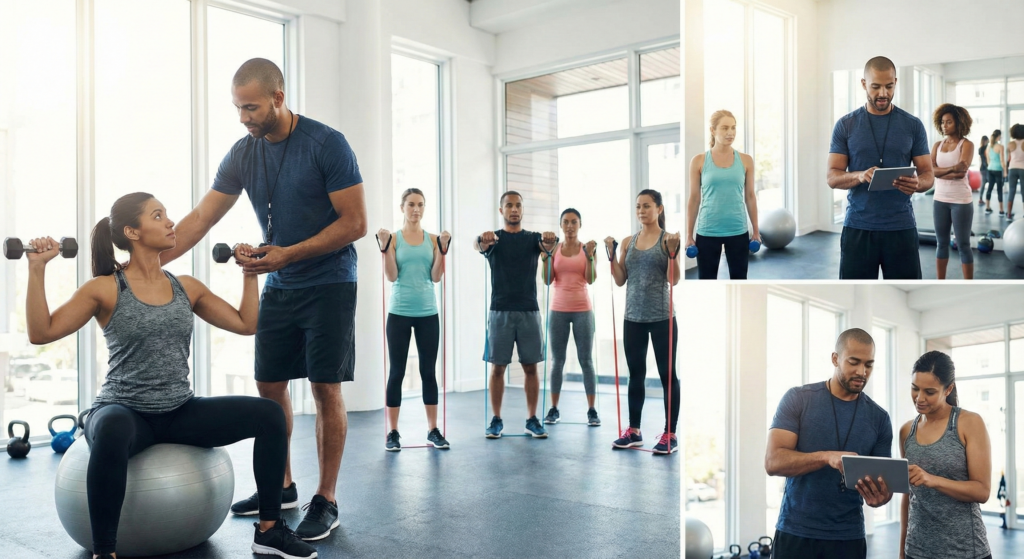
    A collage featuring four images: a male personal trainer helping a woman with dumbbell presses on a stability ball, a group of people exercising with resistance bands, the trainer using a tablet with a client, and the trainer reviewing data on a tablet with another client in a gym.
    Personal training adapts to your needs—whether it’s one-on-one form correction, small group sessions, or data-driven progress tracking.

    Many fitness professionals provide discounts when you purchase a block of training sessions, such as 10 or 20, which can bring the cost per session down. Additionally, the rise of online personal training has created more affordable options, with many trainers offering virtual coaching at a lower price point than traditional in-person sessions. It’s also worth noting that some gyms and fitness centers include a complimentary session with a certified trainer as part of their membership, giving you a chance to experience the service before committing.

    Key Factors Influencing Personal Trainer Prices

    The average personal trainer cost is influenced by several key factors. Understanding these can help you find the right personal trainer for your budget and fitness goals.

    • Experience and Qualifications: An experienced trainer with years of experience and a certification in personal training from a reputable organization like NASM (National Academy of Sports Medicine) will typically charge more. These fitness professionals have invested heavily in their education and have a proven track record of helping clients achieve their fitness goals. A trainer whose credentials include specialized certifications, such as in strength training or personal trainer and nutrition coaching, can also command higher rates.
    • Location and Facility: Your geographic location plays a significant role. Personal trainers in major metropolitan areas with a high cost of living will generally charge more than those in smaller towns. Additionally, the facility itself matters. A trainer at a high-end, private studio will likely have higher rates than one who works at a commercial gym or offers training sessions in your home, where the trainer has to travel.
    • Type of Training Session: The format of the session also dictates the price. One-on-one personal training is the most personalized and therefore the most expensive. Small group training, where you share the cost of the trainer with a few others, is a more affordable alternative. Group fitness classes, which are typically larger, are the most cost-effective option but offer less individual attention.

    Exploring Different Personal Training Options

    When looking for a trainer, you’re not limited to a single format. There are several personal training services available to suit different needs and budgets.

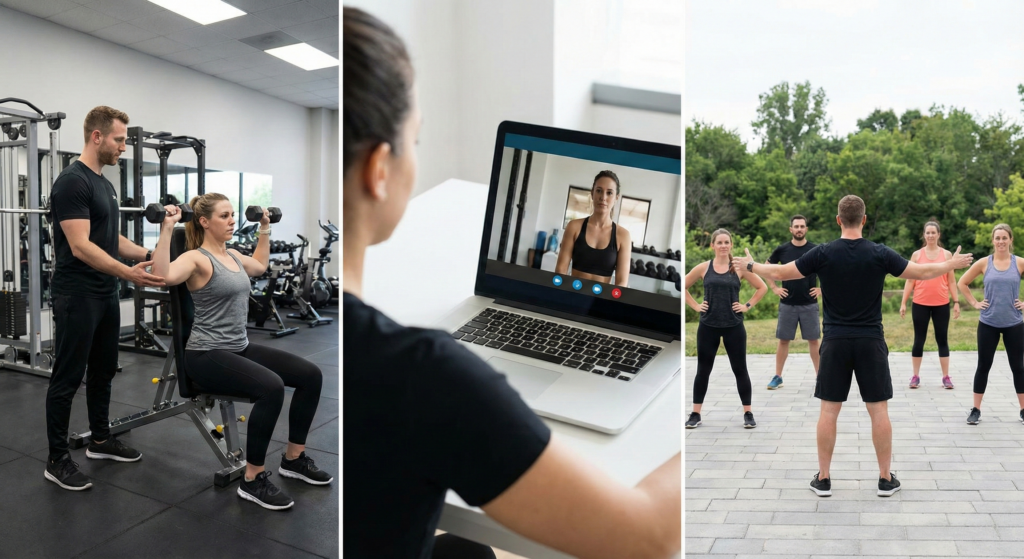
    A three-panel collage showcasing different personal training options: a one-on-one in-person gym session, a remote online coaching session via a laptop, and a small outdoor group fitness class.
    From one-on-one sessions to remote coaching and group classes, choose the training model that fits your budget and lifestyle.
    • In-Person Personal Training: This is the traditional model where you work with a personal trainer face-to-face. Sessions typically last anywhere from 30 minutes to an hour and provide the highest level of immediate feedback on form and technique.
    • Online Personal Training: For those seeking flexibility and a more budget-friendly option, an online personal trainer can be a great choice. This personal training service often involves a fitness instructor creating a customized fitness plan delivered through a fitness app or email, with weekly check-ins and support. The average cost of personal training is often lower in this format.
    • Group Fitness and Small Group Training: If you enjoy a social atmosphere and want to reduce the cost of hiring a personal trainer, consider group options. Many personal trainers offer small group sessions (2-4 people) or lead larger group fitness classes. While you get less individual attention, it can be a fun and motivating way to start your fitness journey.

    Is Hiring a Personal Trainer Worth the Investment?

    Deciding to pay for a personal trainer is a personal choice, but for many, the benefits far outweigh the personal trainer cost.

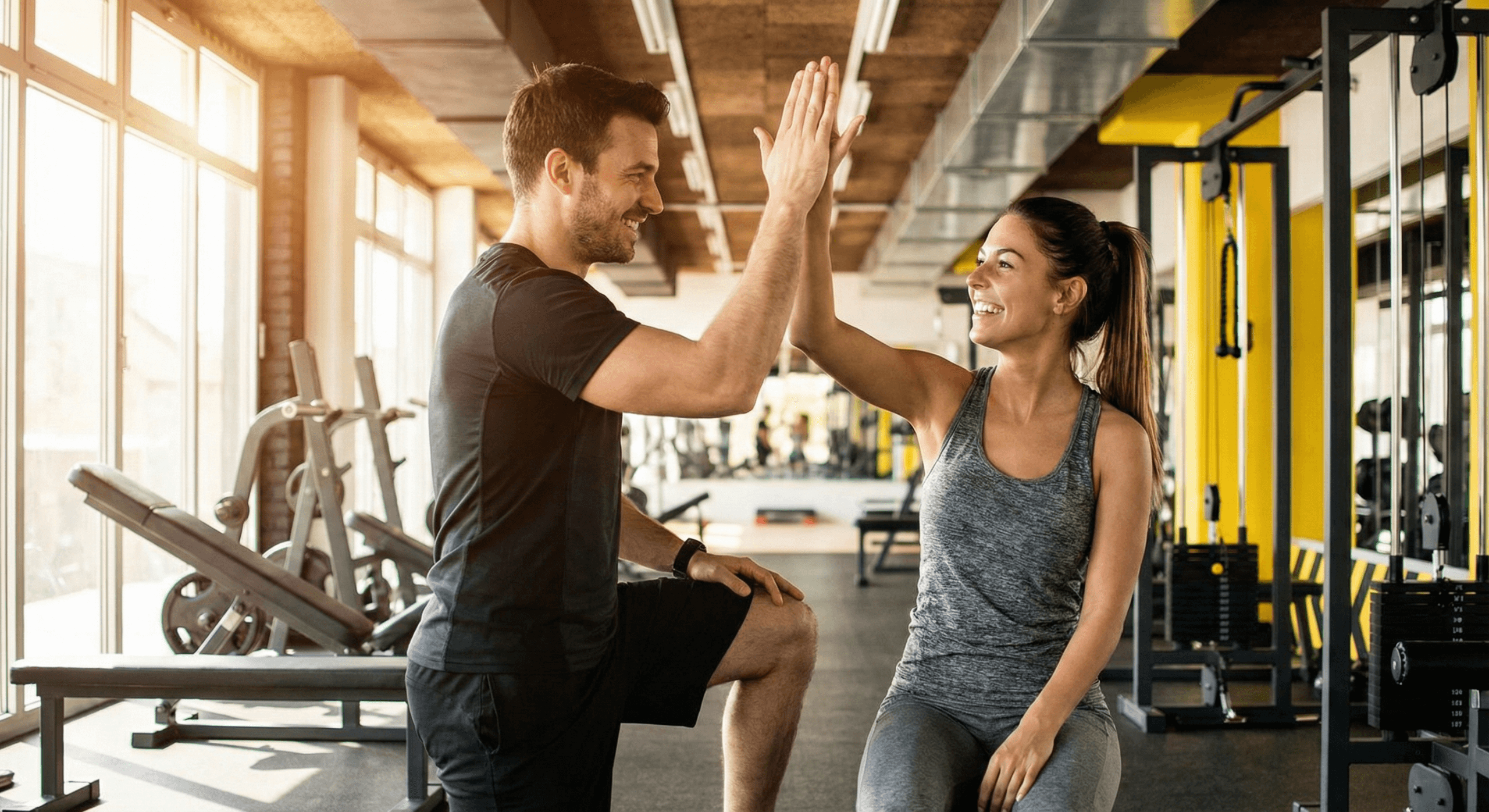
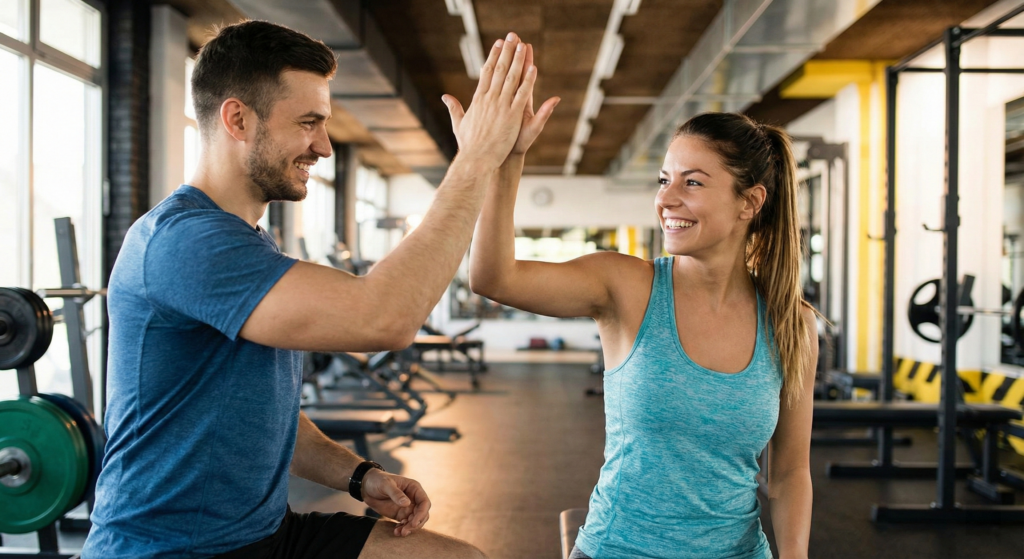
    A male fitness professional in a blue t-shirt and a female client in a teal tank top sharing a high-five and smiling in a well-equipped, sunlit gym.
    Celebrating a successful personal training session: The right support system turns effort into visible results.

    A great personal trainer provides more than just a workout. They assess your current fitness level, create a tailored program to help you achieve your fitness goals, ensure you’re performing exercises safely to prevent injury, and provide the accountability that is often the missing piece for success. Whether your health and fitness goals involve weight loss, building muscle through strength training, or simply improving your overall well-being, a professional personal trainer can be an invaluable guide. When you consider the long-term benefits to your health, investing in personal training is often worth the cost.

    How to Find the Right Trainer for Your Budget

    Finding the right personal trainer doesn’t have to break the bank. Start by defining your budget and fitness goals. Then, research local trainers and compare their personal trainer prices and packages. Many personal trainers offer a free initial consultation or a discounted first session, which is a great way to see if their personality and training style are a good fit for you. Don’t hesitate to ask about their certifications and experience to ensure you’re working with a qualified professional. Ultimately, the goal is to choose a trainer whose expertise aligns with your needs —whether you require a holistic coach or a technical personal trainer—and with whom you feel comfortable and motivated to work.

  • Set SMART Fitness Goals That Actually Work (with Examples)

    Set SMART Fitness Goals That Actually Work (with Examples)

    In the pursuit of a healthier, stronger, and more capable version of ourselves, the path is often paved with good intentions but cluttered with vague aspirations. “Getting fit,” “losing weight,” or “building muscle” are excellent starting points, but without a concrete plan, they remain just that: starting points. This is where the concept of SMART fitness goals comes into play.

    A structured approach to goal setting can transform a nebulous wish into a clear, actionable roadmap, significantly increasing your chances of success and making the journey more enjoyable and rewarding.

    What are SMART Fitness Goals?

    SMART is an acronym that stands for Specific, Measurable, Achievable, Relevant, and Time-bound. This framework is designed to bring clarity and focus to your objectives, moving them from the abstract to the tangible.

    A close-up of a person's wrist wearing a silver smartwatch with a black band, displaying fitness metrics like heart rate and distance, next to a stainless steel water bottle on a light wooden surface.
    Data-driven success: Using a smartwatch to track specific metrics like heart rate and distance helps transform vague fitness desires into measurable, achievable SMART goals.

    Specific: Your goal should be clear and unambiguous. Instead of “I want to run more,” a specific goal would be “I want to run a 5K.”

    Measurable: You need a way to track your progress and know when you’ve achieved your goal. For the 5K example, the distance is the measurement. You can also track your training runs.

    Achievable: The goal should be challenging but realistic. If you’ve never run before, aiming to run a marathon next month is likely setting yourself up for failure and injury. A 5K in three months is a more achievable starting point.

    Relevant: Your goal should matter to you and align with your broader objectives. If you hate running, training for a 5K because your friend is doing it might not be the best use of your time and energy.

    Time-bound: Give yourself a deadline. A goal without a timeframe is just a dream. “I want to run a 5K by October 15th” creates a sense of urgency and helps you plan your training schedule.

    Why Setting SMART Goals is Crucial for Success

    The difference between people who achieve their fitness aspirations and those who don’t often comes down to goal setting. Vague goals are easy to ignore and provide no real direction. SMART goals, on the other hand, act as a compass, guiding your daily actions and decisions. They provide motivation by allowing you to see your progress, and they help you stay accountable to yourself.

    When you can measure your achievements, you get a dopamine hit that encourages you to keep going. Furthermore, the process of setting SMART goals forces you to be honest with yourself about your current abilities and what you’re willing to do to improve them. This self-awareness is a critical component of long-term success.

    A Step-by-Step Guide to Setting Your SMART Fitness Goals

    Ready to transform your fitness journey? Follow these simple steps to create your own SMART goals:

    An overhead view of a person writing in a clean "Goal Setting" planner with a silver pen, sitting on a white desk next to a cup of black coffee and a small succulent plant.
    Turning aspirations into achievements begins with a clear, written SMART goal setting plan.
    1. Reflect on Your “Why”: Before you dive into the specifics, ask yourself why you want to improve your fitness. Is it to have more energy for your kids? To feel more confident? To improve your long-term health? Your “why” will be your driving force when things get tough.
    2. Brainstorm Broad Goals: What are the general areas you want to focus on? You should consider the 5 health-related components of physical fitness, such as strength, flexibility, and cardiovascular endurance.
    3. Apply the SMART Framework: Take one of your broad goals and run it through the SMART filter. Let’s take “improve strength.”
      • Specific: I want to be able to do 10 consecutive push-ups with good form.
      • Measurable: The number of push-ups is the metric. I can track my progress from my current max of 2.
      • Achievable: Going from 2 to 10 is challenging but realistic with consistent training over a few weeks.
      • Relevant: This aligns with my overall goal of building upper body strength and feeling more capable in my daily life.
      • Time-bound: I want to achieve this by the end of next month.
    4. Write Them Down: There is power in putting pen to paper. Write your SMART goals down and place them somewhere you’ll see them every day, like on your fridge or bathroom mirror.
    5. Break It Down: A big goal can be overwhelming. Break it down into smaller, manageable weekly or even daily tasks. For the push-up goal, this could be “do 3 sets of push-ups (or modified push-ups) three times a week.”

    Common Pitfalls to Avoid

    Even with the best intentions, it’s easy to fall into traps that can derail your progress. One common mistake is setting too many goals at once. Trying to overhaul your diet, start a new workout program, and get more sleep all in the same week is a recipe for burnout. Focus on one or two key goals at a time. Another pitfall is being too rigid. Life happens.

    You might get sick, have a work crisis, or go on vacation. Your plan needs to be flexible enough to accommodate these curveballs. If you miss a workout, don’t beat yourself up; just get back on track the next day. Finally, don’t compare yourself to others. Your fitness journey is unique to you. Focus on your own progress and celebrate your own victories, no matter how small they may seem.

    Putting Your Plan into Action

    Now that you have your SMART goals, it’s time to take action. The key is consistency. It’s better to do a short workout three times a week than one long, intense workout once a week.

    • Create a schedule and stick to it as best you can.
    • Treat your workouts like important appointments that you can’t cancel.
    • Track your progress rigorously.
    • Use a journal, an app, or a simple spreadsheet to record your workouts, your nutrition, and how you’re feeling.
    • Review your progress regularly and adjust your plan as needed.
    • If you find a goal is too easy, make it more challenging. If it’s too hard, dial it back.

    Remember, this is a marathon, not a sprint. Be patient with yourself, trust the process, and enjoy the journey of becoming your best self.

    A close-up shot of an athlete kneeling on an outdoor running track to tie the laces of a grey and blue Nike running shoe.
    Setting a SMART goal starts with the right preparation—whether you are training for your first 5K or aiming for a new personal best.

    The road to achieving your best self through fitness is not about perfection; it’s about progress. By setting SMART fitness goals, you are equipping yourself with a powerful tool to navigate this journey with clarity, purpose, and a much higher probability of success. So, take that first step today. Define your goals, make them SMART, and watch as you transform your aspirations into reality, one workout at a time.

  • Family Fitness Challenges: Fun Ideas to Get Everyone Moving

    Family Fitness Challenges: Fun Ideas to Get Everyone Moving

    In our modern, screen-filled world, finding time for family fitness can feel like a daunting task. Between work, school, and household chores, prioritizing physical activity often falls by the wayside.

    However, the benefits of regular exercise for both kids and adults are undeniable, from improved physical fitness to reduced stress and better sleep.

    One of the most effective and enjoyable ways to make exercise a consistent part of your life is through family fitness challenges.

    These challenges are not about intense weight loss or becoming a personal trainer; they are a fun way to get the whole family moving, cultivate healthy habits, and spend quality time together.

    What is a Family Challenge?

    A family fitness challenge is a structured, often time-bound program that encourages everyone in the household to participate in physical activity. It turns what can sometimes feel like a chore into a shared goal, fostering teamwork and motivation. By making exercise a fun fitness game rather than a solitary duty, you can help your family stay active and engaged. This guide will walk you through everything you need to know to create and sustain a successful fitness journey for your family, from understanding the benefits to providing a variety of creative and adaptable ideas that cater to different fitness levels.

    Why Family Fitness Challenges Work?

    The power of a family fitness challenge lies in its ability to transform exercise from a personal obligation into a collective experience. The social support and shared goals that come with exercising as a family can significantly increase the likelihood of sticking with a program. When a family member is feeling unmotivated, others can step in to encourage and motivate them, creating a positive and supportive environment. This shared journey not only improves individual physical fitness but also strengthens family bonds and builds confidence in children as they see themselves achieving goals.

    Moreover, family fitness challenges are a fantastic way to introduce healthy habits in a low-pressure setting. Instead of focusing on individual weight loss or performance, the emphasis is on fun and participation. This approach is particularly effective for getting kids engaged and enjoying physical activity, laying the foundation for a lifetime of wellness. By making fitness fun and integrating it into your family’s routine, you can help everyone, from the youngest to the oldest, develop a positive relationship with exercise and their bodies.

    Physical Health Benefits for All Ages

    Regular physical activity offers a multitude of health benefits for people of all ages. For children and adolescents, it is crucial for the development of healthy bones, muscles, and cardiovascular systems. It also helps in maintaining a healthy weight and can improve their cognitive function, leading to better performance in school. For adults, regular exercise is essential for managing stress, reducing the risk of chronic diseases like heart disease and type 2 diabetes, and maintaining overall physical and mental well-being. Engaging in a variety of activities, from a family walk to more vigorous games like softball or tennis, ensures that everyone gets the 60 minutes of physical activity recommended by health experts.

    Strengthening Family Bonds and Teamwork

    Beyond the physical benefits, family fitness challenges are a powerful tool for strengthening family connections. Working towards a common goal requires communication, cooperation, and mutual support. Whether it’s cheering each other on during a backyard obstacle course or deciding on the route for a weekend hike, these shared experiences create lasting memories and foster a sense of teamwork. The time together spent on a walk or playing ping pong is a valuable opportunity to disconnect from screens and reconnect with each other.

    Fostering Lifelong Healthy Habits

    Perhaps one of the most significant long-term benefits of family fitness challenges is their role in cultivating healthy habits. By making physical activity a consistent part of your family’s routine, you are normalizing exercise and showing your children that it is a natural and enjoyable part of life. This early positive exposure can have a profound impact on their future relationship with health and fitness, helping them to stay active and healthy throughout their lives. Integrating conversations about healthy eating and the use of positive fitness affirmations can further enhance these wellness habits and mindset.

    Creative & Fun Family Fitness Challenge Ideas

    The key to a successful family fitness challenge is to keep it fun, engaging, and varied. There is no one-size-fits-all approach, so it’s important to choose activities that your family will enjoy and that can be adapted to different fitness levels. The best ideas are those that can be easily integrated into your daily tasks and don’t require expensive equipment or a lot of preparation. Here are some diverse family fitness challenge ideas to get you started.

    A family of four—a father, mother, and two young children—on a hiking trail in a green forest, with the young daughter excitedly pointing at a bird perched on a tree branch.
    Education through exploration: Using family nature hikes as a fun way to stay active while teaching children about the great outdoors.

    The “Every Step Counts” Walking Challenge

    This is one of the simplest and most accessible challenges to get the whole family started. The goal is for each family member to increase their daily step count over a set period, such as a 30-day challenge. You can use a simple pedometer or a smartphone app to track steps. To make it more engaging, set a collective family goal (e.g., “Walk the distance to grandma’s house”) or turn it into a friendly competition with small rewards for the person with the most steps or the most improved count. This is a low-impact way to stay active that can easily be done around the house, during a grocery shopping trip, or on a family walk after dinner.

    The Backyard Obstacle Course & Scavenger Hunt

    For a more hands-on and creative approach, turn your backyard or a local playground into a fun fitness arena. Create a simple obstacle course using household items like hula hoops to jump through, ropes to balance on, or cones to weave around. Combine this with a scavenger hunt hike where family members have to find specific items while completing physical tasks like a squat, stretch, or jump. This is a fantastic way to get kids involved in the planning and is a fun way to build strength and cardiovascular endurance while having a great time.

    The “Commercial Break” Workout Challenge

    This challenge is perfect for families who enjoy watching TV together and need a little push to get off the couch. During every commercial break, the entire family has to perform a quick, high-intensity workout. This could be a one-minute plank, a set of bodyweight squats, push-ups, or jumping jacks. This is a great example of an interval training workout that can be done indoors with no equipment. It’s a simple way to add short bursts of physical activity to your day without having to dedicate a large block of time.

    The “Weekend Warrior” Adventure Challenge

    Dedicate a portion of your weekend to a longer, more adventurous activity. This could be a family bike ride on a local trail, a hike in a nearby park, or a day spent playing active games like volleyball or tennis. The key is to choose something that gets everyone moving and out of the house. To keep things interesting, you can rotate the activity each week or let a different family member choose the adventure. This is a great way to explore your local area and build endurance.

    Indoor Fitness Fun for Rainy Days

    Don’t let bad weather derail your family’s fitness plans. There are plenty of fun and effective ways to get a workout indoors. You can have a family dance party in the living room, follow a guided yoga or meditation session on YouTube, or set up a mini circuit workout with stations for exercises like squats, lunges, and push-ups. Other fun options include playing active video games, having a ping pong tournament, or building a pillow fort and having a “snowball fight” with rolled-up socks. These are all excellent ways to keep the family active and kids engaged even when you’re stuck inside.

    Making Fitness a Habit in Your Household

    The key to a successful family fitness challenge is consistency. It’s not about being perfect every day, but rather about making physical activity a regular part of your family’s routine. To help your family stay motivated and stick with the challenge, it’s important to set clear goals, track your progress, and celebrate your successes along the way. Here are some practical tips for making fitness a lasting habit in your household.

    A close-up of a hand writing "Family Fitness Fun" on a white dry-erase wall calendar in a modern kitchen.
    Scheduling success: Turning health into a habit by marking your family fitness challenges on the calendar.

    Start Small and Build Gradually

    When starting a new fitness routine, it’s important to start small and gradually increase the intensity and duration of your workouts. Trying to do too much too soon can lead to burnout and injury, especially for those who are new to exercise. Begin with short, manageable sessions and progressively increase the challenge as your family’s fitness levels improve. For example, you could start with a 15-minute walk after dinner three times a week and gradually work your way up to a 30-minute walk five times a week. This gradual approach will help you build confidence and make the new routine feel more sustainable.

    Schedule It Like Any Other Appointment

    One of the most effective ways to ensure that you stick to your fitness plan is to schedule it into your family’s calendar. Treat your workout sessions like any other important appointment that you can’t miss. This will help you prioritize physical activity and make it a non-negotiable part of your week. You can also try to find a consistent time of day that works for everyone, such as before breakfast, after school, or on weekend mornings. By dedicating specific times for exercise, you are more likely to stay consistent.

    Track Your Progress and Celebrate Milestones

    Tracking your family’s progress is a great way to stay motivated and see how far you’ve come. You can use a simple chart on the refrigerator, a dedicated notebook, or a fitness app to record your activities and achievements. Seeing your progress on paper can be incredibly rewarding and can help you stay focused on your goals. Don’t forget to celebrate your milestones along the way, whether it’s completing a 30-day challenge, reaching a new step count goal, or simply successfully sticking to your routine for a week. Celebrate with a healthy meal, a family movie night, or a new piece of workout gear. These small rewards can go a long way in keeping the whole family motivated and engaged. You can also consider consulting with an exercise specialist to tailor a plan to your family’s needs.

    By incorporating these strategies into your family’s routine, you can create a fun, sustainable, and effective fitness challenge that will benefit everyone in your household. Remember, the most important thing is to have fun and enjoy the process of getting healthy together!

  • What Is Bulking in Fitness? Your Roadmap to Muscle Growth

    What Is Bulking in Fitness? Your Roadmap to Muscle Growth

    In the world of fitness, few terms are as commonly used and yet as frequently misunderstood as “bulking.” For many, it conjures images of bodybuilders eating endless amounts of food and lifting heavy weights.

    While there’s a kernel of truth to that, a successful bulking phase is a much more strategic and calculated process. This guide will walk you through everything you need to know about what bulking means, how to do it effectively, and how to avoid common pitfalls.

    The Core Concept: What Does “Bulking” Mean?

    At its most basic level, bulking refers to a period of time during which you intentionally eat more calories than your body burns. This is known as a calorie surplus. The primary goal of bulking is to provide your body with the extra energy and nutrients it needs to build new muscle tissue.

    Think of it as building a house; you can’t construct a new floor without the necessary bricks and mortar. In this analogy, calories and protein are your building materials, though you may also consider the role of creatine as a powerhouse for health and muscle support

    Bulking is typically part of a larger cycle often referred to as “bulk and cut.” The bulking phase is focused on muscle gain, while the subsequent cutting phase is designed to lose any excess fat gain that occurred during the bulk, maintaining as much muscle as possible. The ultimate goal is to reveal a leaner, more muscular physique.

    The Science of Bulking: Calories and Muscle

    To understand why a calorie surplus is necessary, we need to look at the science of muscle growth. Your body is constantly in a state of breaking down and building up muscle protein. To increase muscle mass, the rate of muscle protein synthesis (building) must exceed the rate of muscle protein breakdown.

    This process is energy-intensive. A calorie surplus provides the extra fuel needed to support muscle growth and repair damaged muscle tissue after a workout. Without this surplus, your body will prioritize other essential functions over building new muscle.

    The key is to find the right balance. A slight surplus is needed to stimulate muscle growth, but too large of a surplus will almost certainly lead to significant fat gain.

    A minimalist white tabletop display featuring a digital food scale holding a bowl of dry oats, three brown eggs, and a protein shaker bottle filled with a chocolate supplement drink.
    Precision nutrition: Tracking your macronutrients and ensuring adequate protein intake is essential for maximizing muscle growth during a bulking phase.

    Types of Bulking: Clean vs. Dirty

    Not all bulks are created equal. The two most common approaches are the “clean bulk” and the “dirty bulk.” Understanding the difference between bulking vs dirty bulking is crucial for your long-term health and success.

    • Clean Bulk: This approach focuses on getting your calorie surplus from nutrient-dense, whole foods. Think lean proteins like chicken and fish, complex carbohydrates like oats and brown rice, healthy fats like avocados and nuts, and plenty of fruits and vegetables. A clean bulk aims to maximize muscle gain while minimizing fat gain. It’s a slower process but results in a better body composition and is better for your overall health.
    • Dirty Bulk: In a dirty bulk, the primary goal is to hit a calorie surplus by any means necessary, often through high-calorie, processed foods like fast food, pizza, and sugary treats. While this method will definitely help you gain weight and muscle mass, it almost always comes with a significant amount of body fat from the bulking phase. This can make the subsequent cutting phase much longer and more difficult.
    A side-by-side comparison of two plates: the left labeled clean bulk showing grilled chicken, quinoa, and asparagus; the right labeled dirty bulk showing a double cheeseburger and french fries.
    Clean vs. Dirty Bulking: Choosing nutrient-dense whole foods over high-calorie processed meals can significantly impact your body composition and energy levels.

    The Role of Training in Bulking

    You can’t just eat your way to a muscular physique; bulking involves a combination of diet and exercise. To build muscle mass, you need to provide a stimulus for growth, and that stimulus is resistance training.

    • Strength Training: The foundation of any bulking program should be a solid weight training routine. Focusing on compound movements like squats, deadlifts, bench presses, and rows recruits multiple muscle groups, allowing you to lift heavier weights and stimulate the most muscle growth.
    • Progressive Overload: To keep making progress, you need to challenge your muscles over time continuously. This concept, known as progressive overload, involves gradually increasing the weight, reps, or sets in your workouts. This constant challenge is what forces your muscles to adapt by growing larger and stronger.
    • Muscle Size and Strength: A well-designed training program will lead to improvements in both muscle size and strength. While the two are related, they are not the same. Training with heavier weights for fewer reps tends to build more muscle strength, while training with moderate weights for higher reps tends to build more muscle size. A good bulking program will often incorporate both.

    How to Bulk Effectively: A Step-by-Step Guide

    A successful bulking cycle requires a plan. Here is a simple guide to bulking to get you started:

    1. Determine Your Calorie Needs: Use an online calculator to estimate your Total Daily Energy Expenditure (TDEE), which is the number of calories you burn in a day. To create a calorie surplus, aim to eat 250-500 calories above your TDEE. This modest surplus will help you gain muscle without excessive fat gain.
    2. Set Your Macronutrient Targets: Calories are important, but so are macronutrients (protein, carbohydrates, and fats).
      • Protein: Consuming enough protein is essential for muscle repair and growth. Aim for 1.6-2.2 grams of protein per kilogram of body weight per day.
      • Carbohydrates: Carbs are your body’s primary energy source for intense workouts. They also help replenish glycogen stores in your muscles, which can help them look fuller.
      • Fats: Healthy fats are crucial for hormone production, including testosterone, which plays a key role in muscle growth.
    3. Design Your Training Program: Create a resistance training routine that you can stick to consistently. Aim to train each major muscle group at least twice a week. Focus on progressive overload and listen to your body to avoid overtraining.
    4. Track Your Progress: Keep a log of your workouts, your nutrition, and your body weight. This will help you see what’s working and what’s not, so you can make adjustments as needed. Remember, the scale isn’t the only measure of progress. Take progress photos and measurements to track changes in muscle definition and size.

    Common Mistakes to Avoid When Bulking

    Even with the best intentions, many people fall into common traps during a bulk. Here are some common bulking mistakes to watch out for:

    • Eating Too Much: A “see-food” diet (see food, eat food) is a recipe for disaster. An excessive calorie surplus will only lead to excessive fat gain, which you’ll just have to diet off later.
    • Not Eating Enough Protein: You can’t build muscle without the right building blocks. Prioritize protein in every meal.
    • Skipping Workouts: Consistency is key. You can’t expect to build significant muscle if you’re only hitting the gym sporadically.
    • Ignoring Recovery: Muscle grows when you’re resting, not when you’re training. Make sure you’re getting enough sleep and allowing your muscles time to recover between workouts.
    • Bulking for Too Long: A bulking phase shouldn’t last forever. Most people will see the best results from bulking for 12-16 weeks, followed by a cutting phase to reveal their hard-earned muscle.

    Transitioning: From Bulk to Cut

    Once you’ve achieved your desired level of muscle gain, it’s time to transition to a cut phase. The goal now shifts from building muscle to losing body fat while maintaining muscle mass.

    This transition should be gradual. Don’t just slash your calories overnight. Slowly reduce your calorie intake over a few weeks until you’re in a slight calorie deficit. Continue to lift weights heavy to give your body a reason to maintain muscle mass.

    The transition from bulking to cutting is a delicate process. The goal is to lose fat, not muscle. Avoid common cutting mistakes like dropping calories too low or doing excessive amounts of cardio, which can lead to muscle loss.

    Conclusion

    Bulking is a highly effective, and often necessary, phase for anyone looking to gain muscle and strength. By understanding the principles of a calorie surplus, prioritizing a clean bulking diet, and following a structured weight training program, you can build as much muscle as possible while minimizing fat gain.

    Remember that bulking is a phase, not a permanent lifestyle. It’s a strategic tool to help you build a stronger, more muscular body, which you can then reveal with a subsequent cutting phase. So, embrace the process, train hard, eat well, and watch your body transform.

  • What Does PR Mean in Fitness and Why It Matters

    What Does PR Mean in Fitness and Why It Matters

    In the world of fitness, acronyms can sometimes be as confusing as a complex training program. You may have overheard someone excitedly talk about hitting a new “PR” in the gym or seen the term splashed across fitness enthusiasts’ social media posts. But what does PR mean in fitness, and why is it such a celebrated milestone?

    Understanding Personal Records (PR) is a key part of any fitness journey, whether you’re into weightlifting, running, or any other fitness activity. This guide will break down everything you need to know about PRs, from their definition to how you can set a pr goal and achieve your own.

    Defining a PR in the Fitness Context

    At its core, a PR, or personal record, refers to the best performance an individual has achieved in a specific exercise or activity. It is a measurable milestone that signifies progress and improvement. In a gym setting, this could mean lifting the heaviest weight you can lift for a particular exercise, like a squat or deadlift.

    However, a personal best isn’t limited to just the maximum weight you can lift. It can also apply to endurance activities, like running your fastest 5K, or achieving a new high for the number of reps in a given exercise.

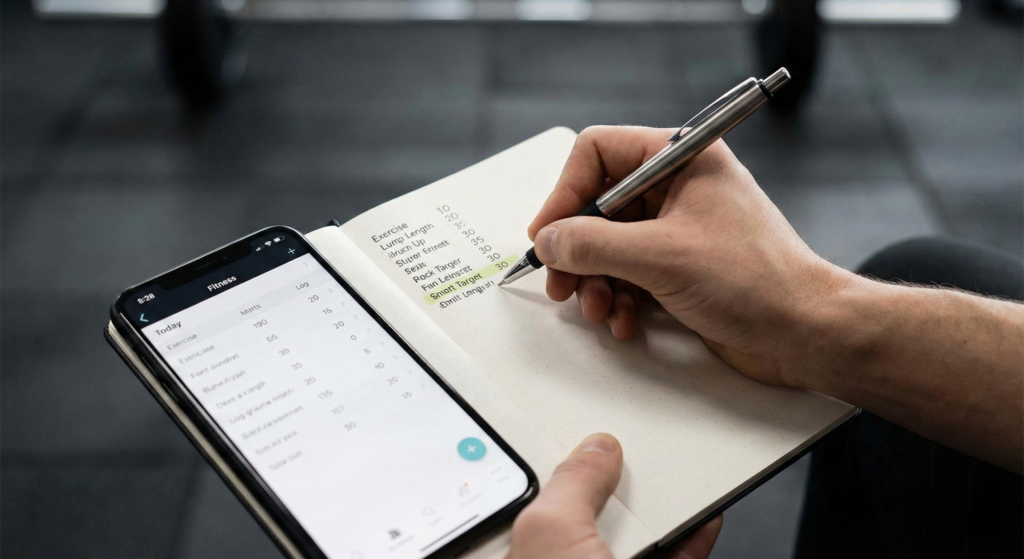
    A close-up view of a person's hands using a silver pen to write exercise data in a notebook while holding a smartphone that displays a fitness tracking app with a list of daily workouts.
    The power of documentation: Combining digital tracking with a physical workout log ensures you never lose sight of your progress toward a new personal record.

    A PR is a personal benchmark, meaning it’s unique to you and your training history. It’s not about comparing yourself to others but about tracking your progress against your own previous bests. Achieving a new pr is a tangible sign that your consistent training and hard work are paying off, which can be incredibly motivating.

    The Role of PRs in Fitness Progression

    Personal records play a crucial role in any effective training program. They serve as concrete evidence of your progress, allowing you to see how far you’ve come from your starting point.

    This is especially important when you feel like you’ve hit a plateau. Seeing that you can now lift a certain weight for more reps than before, or that your one rep max (1RM) has increased, provides the motivation to keep going to the gym and pushing yourself.

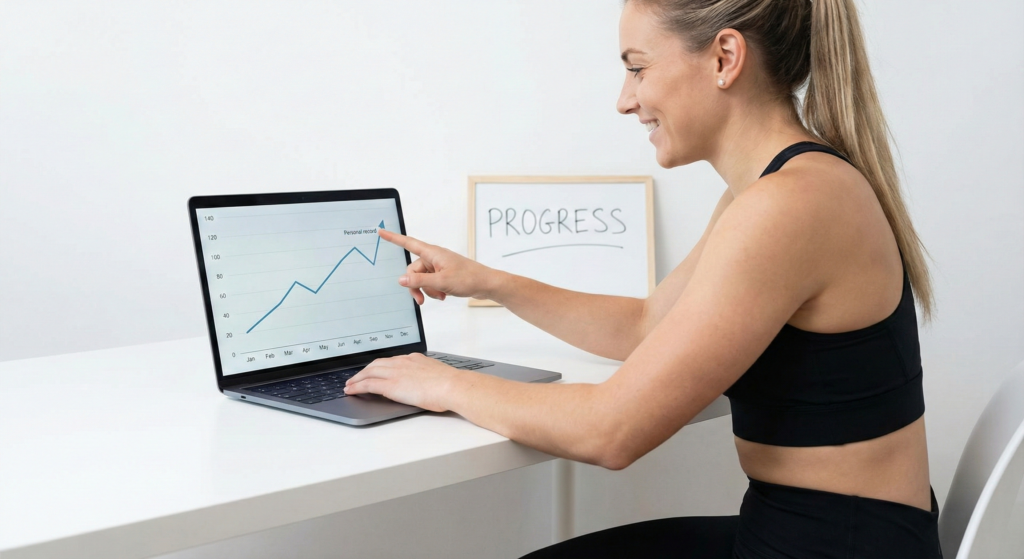
    A smiling woman in black athletic wear sitting at a white desk and pointing to a blue line graph on a laptop screen that shows an upward trend labeled Personal Record.
    Visualizing success: Tracking your performance data allows you to celebrate every Personal Record and stay motivated for long-term growth.

    Moreover, PRs are essential for implementing progressive overload, a fundamental principle of strength training. By knowing your current PRs, you can structure your future workouts to gradually increase the intensity, volume, or amount of weight, ensuring continuous improvement. Without these benchmarks, it’s difficult to know if your training regimen is truly effective.

    Types of Personal Records

    While the term “PR” is often associated with the heaviest weight possible on a barbell, there are several different types of PRs you can set. Understanding these can help you set more diverse and achievable fitness goals.

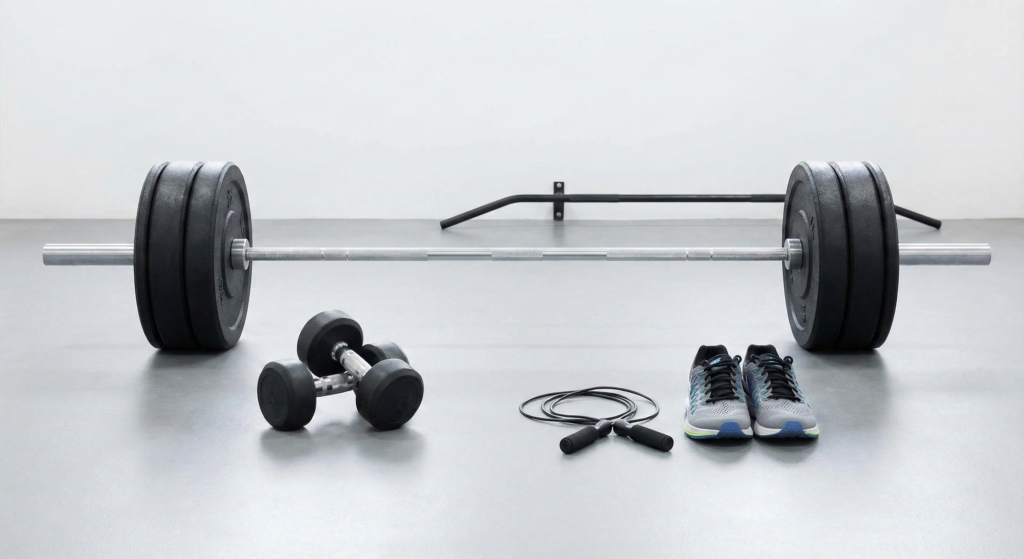
    A minimalist gym floor setup featuring a barbell loaded with heavy bumper plates, a pair of dumbbells, a jump rope, and a pair of blue and grey running shoes against a white wall.
    The ultimate benchmark: A One-Rep Max (1RM) is the gold standard for measuring absolute strength and setting new fitness PRs.

    1RM (One-Rep Max) PR

    This is the most common understanding of a PR in weightlifting. It refers to the maximum amount of weight you can lift for a single repetition of a specific exercise with proper form. For example, a new bench press PR would be the heaviest weight you can successfully press once. This type of PR is a direct measure of maximal strength.

    Rep Max PR

    A rep max PR is the heaviest weight you can lift for a specific number of reps. For instance, you might have a 5-rep max on the squat or a 10-rep max on deadlifts. This type of PR is excellent for tracking strength endurance and is often safer to test regularly than a 1RM.

    Volume PR

    A volume PR refers to the total amount of work performed in a workout or for a specific exercise. You can calculate this by multiplying sets x reps x weight. For example, if you bench pressed 100 lbs for 3 sets of 10 reps last week (3,000 lbs total volume) and this week you did 105 lbs for the same sets and reps (3,150 lbs total volume), you’ve set a new volume PR. This is a great way to track progress even when you aren’t testing your maximal strength.

    Endurance or Time-Based PR

    For cardiovascular fitness activities, a PR is often related to time or distance, such as running a mile in your fastest time ever or hitting a new distance-based PR during a Cooper Fitness Test. This could be running a mile in your fastest time ever, holding a plank for a longer duration, or completing a specific workout in less time.

    Skill-Based PR

    In functional fitness or gymnastics, a PR can be achieving a new skill for the first time, such as your first unassisted pull-up, a muscle-up, or a handstand push-up. These are significant fitness milestones that indicate improved strength, coordination, and body control.

    How to Set and Achieve a New PR

    Setting a new pr is an exciting goal, but it requires careful planning and consistent effort. Here’s a step-by-step approach to help you on your path to a new personal best.

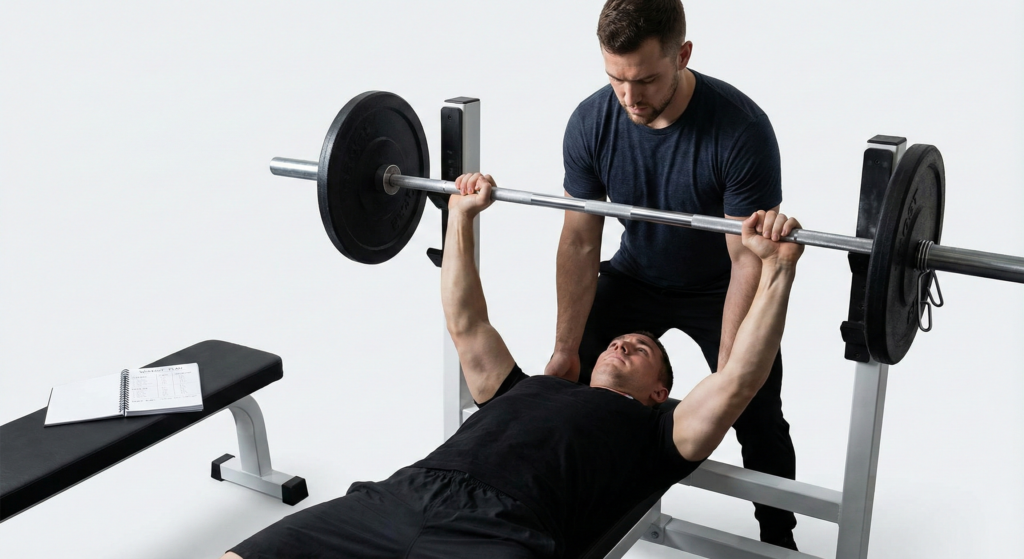
    A male athlete performing a barbell bench press on a weight bench while a spotter stands behind him to provide safety and assistance in a bright, minimalist gym setting.
    Safety first: Having a reliable spotter is essential when testing your limits and aiming for a new personal record.

    Set a Realistic Goal

    First, identify a specific exercise or activity for which you want to set a PR. Be realistic about what you can achieve within a given timeframe. A 5-10 lb increase on a major lift over a few months is a solid goal.

    Follow a Structured Training Program

    Don’t just go to the gym and randomly lift weights. A well-designed training program that incorporates progressive overload is essential. Your program should gradually increase the intensity and volume of your workouts over time, leading you up to your PR attempt.

    Prioritize Form and Technique

    Before attempting to lift heavier weights, ensure your form is impeccable. Poor technique not only increases the risk of injury but can also limit your strength potential. Consider working with a coach to analyse your form, or research the cost of a personal trainer to find professional guidance for your PR attempts.

    Don’t Neglect Recovery

    Adequate rest and nutrition are just as important as the workouts themselves. Your body needs time to repair and rebuild muscle tissues after rigorous exercise. Ensure you’re getting enough sleep and eating a balanced diet to support your training.

    Plan Your PR Attempt

    When you feel ready to attempt a new pr, plan for it. Choose a day when you are well-rested and free from stress. Warm up thoroughly, starting with lighter weights and gradually working your way up to your target weight. Have a spotter present for safety, especially for lifts like the bench press or squat.

    Listen to Your Body

    On the day of your PR attempt, listen to your body. If something doesn’t feel right, or if you’re not hitting your numbers during the warm-up, it’s okay to call it off and try another day. Pushing through pain or extreme fatigue can lead to injury.

    Celebrate Your Success

    When you finally achieve a new pr, take a moment to celebrate! It’s a significant accomplishment that reflects your dedication and hard work. Share your success with friends, family, or your fitness community to stay motivated for your next goal.

  • Most Popular Types of Fitness Classes

    Most Popular Types of Fitness Classes

    In the world of fitness, there is no one-size-fits-all approach. The best workout routine is the one that you enjoy and can stick to consistently. Fortunately, the modern fitness landscape offers an incredible variety of classes designed to cater to every fitness level, interest, and goal.

    Whether you are a beginner looking for introductory classes, learning how to start a fitness journey, or an experienced athlete seeking a new challenge, group fitness classes provide a structured, motivating, and social environment to help you achieve your physical fitness aspirations.

    From high-energy cardio workouts to strength-building sessions and mind-body practices, there are many different types of classes to explore. This guide will walk you through the most popular types of fitness classes, helping you navigate the options and find the perfect fit for your fitness journey.

    Cardiovascular-Focused Classes

    Cardiovascular fitness is a cornerstone of overall health, and cardio-focused group exercise classes are a fantastic way to get a great cardio workout. These classes are designed to elevate your heart rate and improve your stamina; to see how much your performance has improved, you can periodically use the Cooper Test to assess your aerobic endurance. They often involve continuous movement, set to upbeat music, and are led by instructors who keep the energy high.

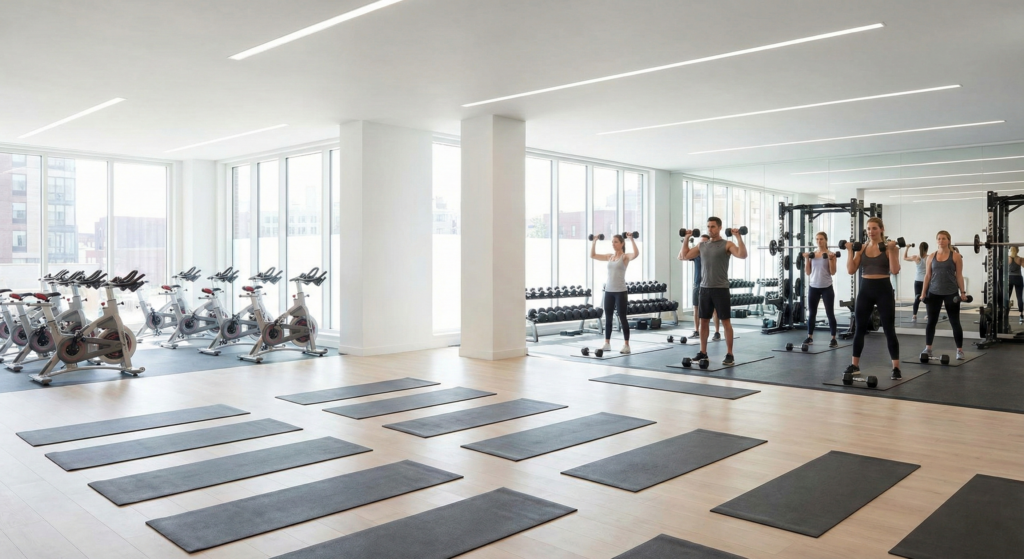
    A wide shot of a spacious, modern gym featuring a designated functional training area with yoga mats, a row of stationary bikes, and a group of people performing dumbbell overhead presses in a weight area.
    Building a versatile routine: A well-equipped fitness facility provides the variety needed to balance cardiovascular health, strength training, and flexibility work.

    Indoor Cycling (Spin Class)

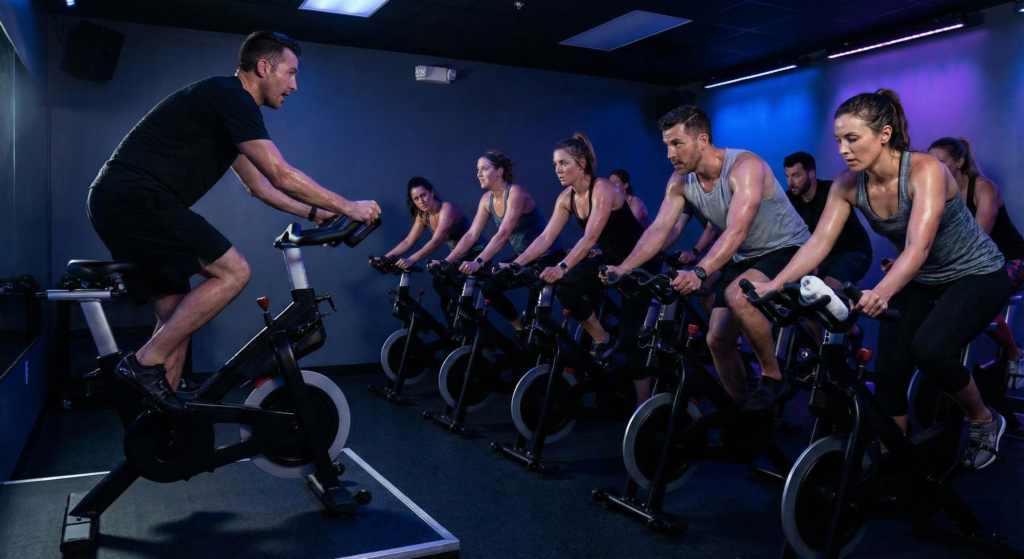
    An indoor cycling class, commonly known as a spin class, is a high-intensity cardio workout performed on a stationary bike. Instructors lead the class through a simulated ride that includes hill climbs, sprints, and intervals of varying intensity. You control the resistance on your bike, allowing you to adjust the workout to your own fitness level. These classes are a great way to build lower body strength and cardiovascular endurance without the impact on your joints. The motivating music and group atmosphere make for a heart-pumping workout experience that is popular among fitness enthusiasts.

    A group of people in a dark, neon-lit studio participating in an indoor cycling class, following a male instructor at the front of the room.
    Riding the rhythm: Indoor cycling classes offer a high-energy, low-impact cardiovascular workout led by motivating instructors.

    Dance Fitness (e.g., Zumba)

    For those who love to move to music, dance fitness classes like Zumba are a perfect choice. These classes combine dance choreography with aerobic exercises to create a dynamic and enjoyable workout. You don’t need to be a professional dancer to participate; the focus is on movement and having fun while getting a great cardio workout. Dance fitness classes are a great way to improve coordination, burn calories, and relieve stress. The variety of music styles, from Latin to hip-hop, ensures there’s a class to suit different tastes, making it a popular type of workout for many.

    High-Intensity Interval Training (HIIT)

    A HIIT class involves short bursts of intense exercise followed by brief recovery periods. This workout style is known for its efficiency, as it can deliver significant cardiovascular and metabolic benefits in a shorter amount of time compared to steady-state cardio. HIIT classes often incorporate a mix of bodyweight exercises, cardio drills, and sometimes equipment like dumbbells or kettlebells. The intense nature of a HIIT workout challenges your body and can continue to burn calories even after the class is over. These classes are designed to push you to your limits and are a great option for those looking for an intense workout that maximizes results.

    Strength and Resistance Classes

    Strength training is essential for building muscle, increasing metabolism, and improving bone density. Group workout classes focused on strength utilize various types of equipment to target different muscle groups, providing a comprehensive full-body workout. These classes are led by instructors who provide guidance on proper form and technique, ensuring a safe and effective workout for participants of various fitness levels.

    Body Pump and Barbell Classes

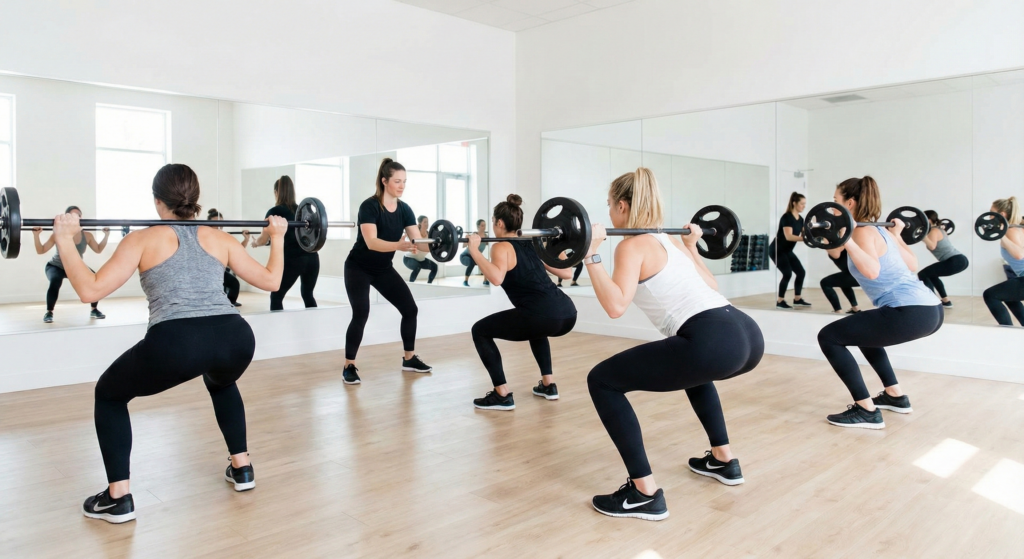
    A group of women in a bright fitness studio performing synchronized barbell back squats during a high-repetition strength training class.
    Strength in numbers: Group resistance classes like BodyPump use high repetitions and light to moderate weights to build lean muscle and endurance.

    Body Pump is a popular choreographed weight training class that uses a barbell with adjustable weights. Set to music, the class focuses on high repetitions with light to moderate weights to build strength and muscular endurance. The class typically works through different muscle groups, one track at a time, providing a full-body workout.

    Other barbell classes may focus on heavier lifts with fewer repetitions, catering to different goals. These classes are a great way to be introduced to weight training in a structured group environment.

    Bootcamp and Circuit Training

    Bootcamp and circuit training classes are designed to be a well-rounded workout that challenges your body in multiple ways. They typically involve a series of stations with different exercises, which can include a mix of cardio, strength training, and functional movements. You’ll move from one station to the next with minimal rest, keeping your heart rate up.

    These classes often use a variety of equipment like dumbbells, resistance bands, medicine balls, and bodyweight exercises. The variety of exercises and the team-oriented atmosphere make these classes a popular choice for a comprehensive fitness routine.

    Mind-Body and Flexibility Classes

    For a more holistic approach to fitness that emphasizes the connection between the body and mind, mind-body and flexibility classes are an excellent option. These classes focus on improving flexibility, balance, core strength, and mental well-being through controlled movements and breathwork. They offer a great way to de-stress and complement more intense workouts.

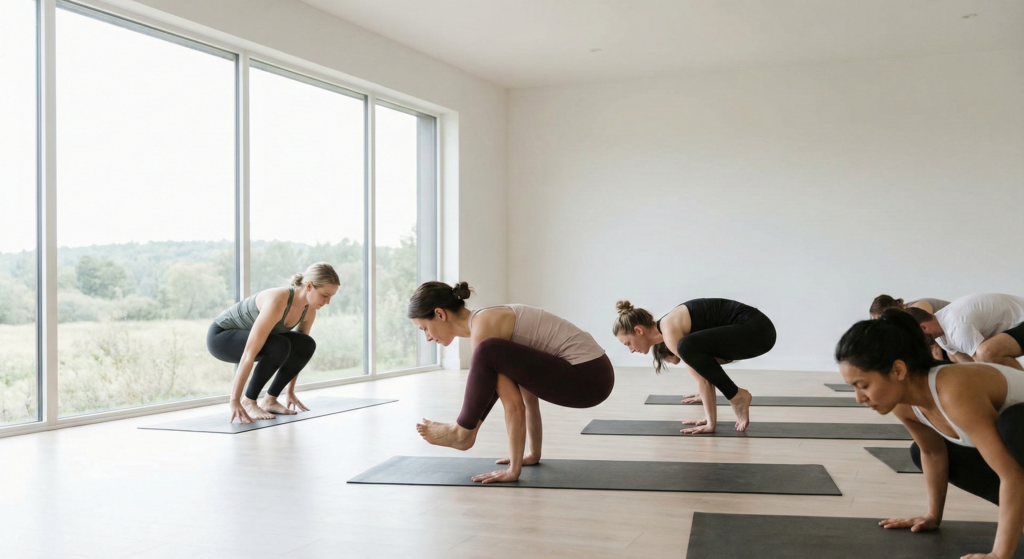
    A group of people in a bright, minimalist yoga studio practicing advanced balancing poses, including crow pose, on black mats in front of large windows.
    Mindful movement: Yoga classes offer a unique combination of physical challenge, flexibility, and mental clarity.

    Yoga

    A yoga class is a practice that combines physical postures, breathing techniques, and meditation. There are many different types of yoga, ranging from gentle and restorative styles to more vigorous and physically demanding practices like Vinyasa or Ashtanga. A typical class focuses on flowing through a series of poses to improve flexibility, strength, and balance, while also promoting relaxation and mental clarity. Yoga is a great option for individuals of all fitness levels and can be easily modified to suit your needs.

    Pilates

    Pilates is a low-impact exercise method that focuses on strengthening the core muscles, improving posture, and enhancing flexibility. It involves a series of controlled movements performed on a mat or specialized equipment like the Reformer. Pilates emphasizes precise execution and breath control to target deep stabilizing muscles. It is an excellent complement to other types of workouts and can help prevent injuries by improving body alignment and core stability.

    Barre

    Barre classes are a unique fitness trend that combines elements of ballet, Pilates, and yoga. The class is performed at a ballet barre and uses small, isometric movements to sculpt and tone muscles, particularly in the legs, glutes, and core. It also incorporates light weights and resistance bands for upper body work. Barre is a low-impact workout that is highly effective for building lean muscle and improving posture.

    Specialty and Niche Classes

    Beyond the traditional categories, the world of fitness offers a variety of specialty and niche classes that cater to specific interests and goals. These unique fitness classes provide a fun and different way to challenge your body and keep your exercise routine fresh and exciting.

    Boxing and Kickboxing

    A group of people in an industrial-style gym participating in a boxing fitness class, with participants hitting heavy bags while an instructor in the center demonstrates a punching technique.
    High-intensity impact: Boxing classes combine cardiovascular conditioning with functional strength and stress relief.

    Boxing and kickboxing classes are high-energy workouts that combine cardio and strength training with martial arts techniques. You’ll learn punches, kicks, and defensive movements, often practiced on punching bags or with a partner holding pads.

    These classes are a great way to improve cardiovascular fitness, coordination, and upper body strength, while also providing an excellent outlet for stress relief. The intense nature of the workout makes it a popular choice for those looking for a challenging and empowering experience.

    Aqua Fitness

    Aqua fitness classes are performed in a swimming pool and are an excellent low-impact option for all fitness levels. The buoyancy of the water reduces stress on the joints while the water’s resistance provides a challenging workout for the muscles.

    Classes can range from gentle water aerobics to high-intensity interval training and even aqua cycling. They are a great way to improve cardiovascular fitness and strength without the risk of impact-related injuries.

    Functional Fitness

    Functional fitness classes focus on exercises that mimic everyday movements to improve your performance in daily life.

    These classes use bodyweight exercises, free weights, and other equipment to train multiple muscle groups simultaneously, improving strength, balance, and coordination. The goal is to build a body that is capable and resilient in real-world situations.

    How to Choose the Right Class for You

    With so many different types of fitness classes available, choosing the right one can feel overwhelming. The key is to consider your personal fitness goals, current fitness level, and what kind of activities you enjoy.

    If your goal is weight loss, a high-intensity cardio class like HIIT or a spin class might be a good fit. If you’re looking to build muscle, strength training classes are a great way to get started. For stress relief and flexibility, a yoga class is an excellent choice.

    Consider trying a variety of classes to see what you like best. Many gyms and studios offer introductory classes or trial periods. Don’t be afraid to step out of your comfort zone and try something new.

    The most important thing is to find a workout that challenges you, keeps you engaged, and that you look forward to doing. A well-rounded fitness routine often includes a mix of different types of classes to ensure you are addressing all aspects of fitness. Remember that consistency is key, and finding a class you enjoy is the best way to stick with it and achieve your fitness journey goals.

  • 90-Day Fitness Challenge Guide for a Total Body Transformation

    90-Day Fitness Challenge Guide for a Total Body Transformation

    Embarking on a plan 90 day fitness challenge is a powerful commitment to your health and fitness. This isn’t just about a temporary fix; it’s about initiating a lasting lifestyle change. Over the next 90 days, you will push your limits, reshape your habits, and witness a remarkable body transformation.

    Whether you’re looking to lose weight, build muscle, or simply improve your overall fitness level, this comprehensive guide will provide you with a structured blueprint for success.

    Structuring Your 90-Day Workout Plan

    A minimalist home gym setup featuring a grey yoga mat unrolled on a light wood floor, a row of black dumbbells, resistance bands hanging on the wall, and a tablet on a stool displaying a workout calendar.
    Built for success: A dedicated, well-organized workout space and a structured training plan are the foundation of a 90-day fitness transformation.

    A successful 90-day workout challenge requires a phased approach, often referred to as periodization. This ensures you progressively challenge your body, prevent plateaus, and minimize the risk of injury. We will break the 90 days into three distinct 30-day phases. This structure is designed to help you build a strong foundation, increase your metabolism, and achieve a complete body transformation.

    Phase 1: Foundation and Stability (Days 1-30)

    The first month focuses on building a solid foundation of strength and endurance. Your workout routine will prioritize mastering proper form with bodyweight exercises and light resistance. This phase is crucial for preparing your muscles, tendons, and ligaments for more intense training later on.

    • Focus: Correct technique, core stability, and muscular endurance.
    • Types of Exercises: Squats, lunges, push-ups, planks, and bodyweight rows.
    • Frequency: 3-4 full-body workout sessions per week, with active recovery on other days.

    Phase 2: Strength and Hypertrophy (Days 31-60)

    In the second phase, we will shift the focus to strength training and building muscle mass. You will start to add weight to your exercises and decrease the number of reps. This increased resistance is key to stimulating muscle growth and boosting your overall strength.

    • Focus: Increasing strength and building muscle.
    • Types of Exercises: Incorporate dumbbells, barbells, or resistance bands for exercises like bench presses, deadlifts, and overhead presses, focusing on major muscle groups like chest and legs.
    • Frequency: 4-5 workout sessions per week, potentially splitting routines into upper and lower body days.

    Phase 3: Power and Definition (Days 61-90)

    The final phase is all about maximizing your results. You will combine strength exercises with explosive movements and high-intensity interval training (HIIT) to burn more calories, shed body fat, and reveal the physique you’ve built.

    • Focus: Fat loss, muscle definition, and power.
    • Types of Exercises: Plyometrics (like jump squats), circuit training, and compound lifts performed at a higher intensity.
    • Frequency: 5-6 workout sessions per week, with a strong emphasis on intensity and recovery.

    Fueling Your Body: Nutrition and Meal Plans

    A top-down view of a healthy meal prep setup featuring a plate with grilled chicken, quinoa, sweet potatoes, broccoli, and avocado, alongside a matching glass meal prep container, a bowl of mixed nuts, and a water bottle.
    Fueling the transformation: Consistent meal prep and a balance of lean proteins, complex carbohydrates, and healthy fats are the cornerstones of a successful 90-day fitness challenge.

    Fitness and nutrition go hand-in-hand. You cannot out-train a bad diet. To transform your body in 90 days, you need to fuel it with the right nutrients. Your eating habits will play a decisive role in your ability to lose weight, build muscle and lose fat, and improve your overall health.

    Macronutrients: The Building Blocks

    Understanding macronutrients—protein, carbohydrates, and fats—is essential.

    • Protein: Crucial for muscle repair and growth. Aim to include a source of lean protein in every meal, such as chicken, fish, tofu, or legumes. This is especially important as you engage in strength and muscle training.
    • Carbohydrates: Your body’s primary energy source. Focus on complex carbohydrates like whole grains, fruits, and vegetables, which provide sustained energy for your workouts.
    • Fats: Necessary for hormone production and overall health. Incorporate healthy fats from sources like avocados, nuts, seeds, and olive oil.

    Creating a Sustainable Meal Plan

    A rigid, restrictive diet is often unsustainable. Instead, focus on creating a meal plan you can stick to for the 90-day challenge and beyond.

    • Plan Ahead: Taking time each week to plan your meals can prevent impulsive, less healthy choices.
    • Hydration: Drink plenty of water throughout the day. It’s vital for metabolism and performance.
    • Listen to Your Body: Pay attention to hunger and fullness cues. Eat when you’re hungry and stop when you’re satisfied.

    Tracking Progress and Staying Motivated

    A top-down view of a wooden desk featuring an open workout log with handwritten data, a smartphone displaying fitness graphs, a measuring tape, and a small sign that reads CONSISTENCY IS KEY.
    Tracking the journey: Maintaining a detailed log of your workouts and body measurements is vital for staying accountable during a long-term fitness challenge.

    Maintaining motivation over a 90-day period can be challenging. Tracking your progress is a powerful tool to keep you focused and inspired. Seeing tangible results, even small ones, can be a huge morale booster on your fitness journey.

    Effective Tracking Methods

    • Workout Log: Record the exercises, sets, reps, and weights used in each session. This allows you to track your strength gains and ensure progressive overload. You can use a notebook or a best workout app for this.
    • Body Measurements: Don’t rely solely on the scale. Take measurements of your chest, waist, hips, arms, and legs every few weeks to monitor changes in your body composition.
    • Progress Photos: Take photos at the beginning of the challenge, and then every 30 days. These can reveal changes in your physique that the scale might miss.

    Finding Your “Why” and Staying Consistent

    Consistency is key to success in any fitness challenge.

    • Set Clear Goals: Define what you want to achieve by the end of the 90 days, ensuring you set SMART fitness goals that are specific and measurable. Are you looking to lose weight, build muscle, or simply feel more energetic?
    • Find a Support System: Share your goals with friends or family, or join an online community. Having people to hold you accountable can make a big difference. A challenge includes not just the physical work, but also building a supportive environment.
    • Celebrate Milestones: Acknowledge and celebrate your achievements along the way, whether it’s lifting a heavier weight, running a longer distance, or sticking to your meal plan for a week.

    Crucial Role of Recovery and Mindset

    A woman sitting in a meditative, cross-legged pose on a yoga mat in a bright, minimalist room with a foam roller and folded towel nearby.
    The mental edge: Cultivating a strong mindset and prioritizing recovery are essential components for sustaining a 90-day fitness challenge.

    Recovery is an often-overlooked but essential component of any successful fitness program. Your muscles need time to repair and grow after workouts. Neglecting recovery can lead to overtraining, injury, and burnout.

    • Rest Days: Schedule at least 1-2 full rest days per week. This allows your body to recover and adapt to the training stimulus.
    • Sleep: Aim for 7-9 hours of quality sleep each night. Sleep is when your body does most of its repair work.
    • Active Recovery: On some non-training days, engage in light physical activity like walking, stretching, or yoga to promote blood flow and reduce muscle soreness.

    Cultivating a Positive Mindset

    Your mindset is just as important as your workout plan and diet. A positive attitude can help you overcome challenges and stay focused on your goals.

    • Embrace the Journey: Focus on the process of becoming healthier and stronger, rather than just the end result.
    • Be Patient: Real change takes time. Don’t get discouraged if you don’t see immediate results. Trust the process and stay consistent.
    • Practice Self-Compassion: Be kind to yourself. If you miss a workout or have a slip-up with your diet, don’t beat yourself up. Just get back on track the next day.

    By following this structured plan 90 day fitness challenge, focusing on nutrition, tracking your progress, and prioritizing recovery, you can achieve a remarkable 90-day body transformation and establish healthy habits that will last a lifetime.

    Remember, the most important step is the first one. Start today and take control of your health and fitness.