

Starting a fitness journey can feel like standing at the base of a mountain. The path ahead is unclear, the amount of information is overwhelming, and the fear of failure is real. But the truth is, every single person you see with a high fitness level started exactly where you are right now: as a beginner. The most important step is the first one.
This guide will walk you through exactly how to start a fitness journey in a safe, sustainable, and effective way. We will move past the confusion and create a clear roadmap to help you get fit, improve your overall health, and, most importantly, make fitness a lasting part of your life. Let’s get you started.
The Pre-Workout Phase: Setting the Stage for Success

Before you perform your first new exercise, it’s crucial to lay a solid foundation. This isn’t just about buying new gear; it’s about preparing your body and mind for the new workout ahead.
Check Your Health Status
Safety should always be your top priority. If you are new to exercise, returning after a long break, or have any pre-existing health conditions, it is highly recommended to get a physical examination from a doctor. This isn’t a roadblock; it’s a green light to start working out with confidence.
A check-up can identify any potential issues and help you create a plan tailored to your specific needs, which is key to reduce the risk of injury. A doctor can give you the all-clear to start working on your physical health.
Find Your “Why” and Set SMART Goals
Why do you want to start a fitness journey? “To get fit” is a vague ambition, not a plan. You need a powerful “why” to keep you motivated when things get tough. Are you doing it to have more energy for your kids? To improve your long-term health? To feel more confident?
Once you have your “why,” translate it into SMART fitness goals: Specific, Measurable, Achievable, Relevant, and Time-bound. Instead of saying “I want to exercise more,” a SMART goal would be: “I will complete a 30-minute low-impact workout three times a week for the next month.” This is a realistic milestone that will help you start small and build momentum.
Creating Your First Workout Plan: The Building Blocks
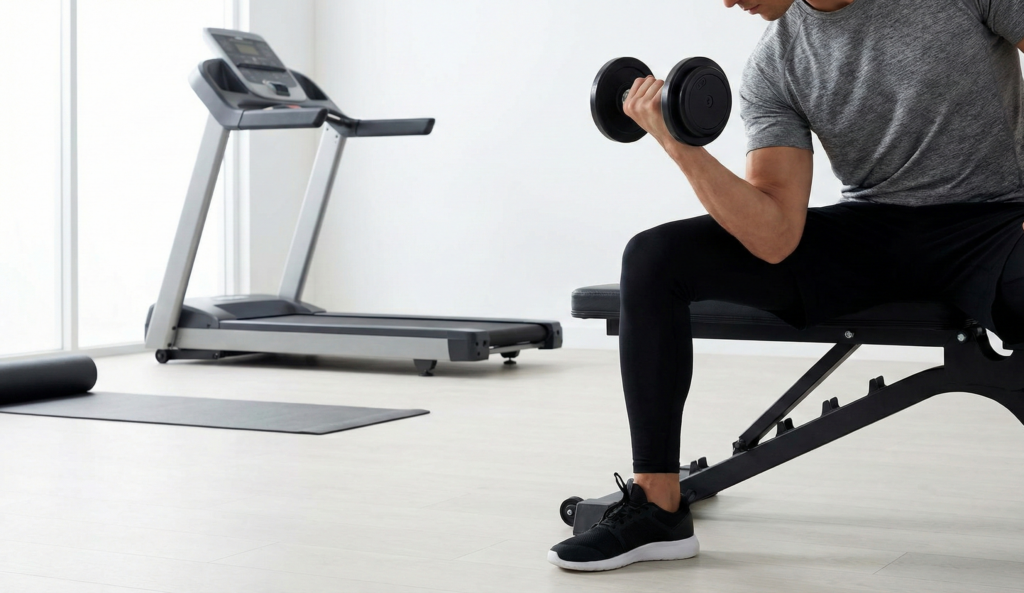
A successful fitness routine is not about doing one thing over and over. It’s about building a well-rounded fitness program that incorporates different types of exercise. A good beginner workout plan should include three main pillars.
The Three Pillars of Fitness: Cardio, Strength, and Flexibility
- Cardio (Cardiovascular Exercise): This is any activity that gets your heart rate up. It’s crucial for heart health and burning calories. For a beginner, this could be brisk walking on a treadmill, cycling, swimming, or even dancing. The goal is to start slowly and gradually increase the duration and intensity.
- Strength Training: This involves using resistance to build muscle and strength. It doesn’t mean you have to become a bodybuilder. Strength training is essential for boosting your metabolism, improving bone density, and supporting daily activities. You can start working your major muscle groups using your own body workout weight, resistance bands, or light dumbbells.
- Flexibility and Mobility: Often overlooked, this pillar is vital for maintaining a good range of motion, preventing injuries, and aiding recovery. Stretching and activities like yoga are excellent for improving functional fitness and should be part of every workout.
Structuring Your Weekly Routine
Don’t try to do everything at once. A sustainable exercise plan for a beginner might look like this:
- Frequency: Aim to exercise 3-5 days a week. Three times a week is a fantastic starting point to build consistency.
- Duration: Start with shorter sessions, around 20-30 minutes. You can increase the intensity and duration as your fitness improves.
- Variety: Mix it up by exploring popular types of fitness classes, as a sample week could include brisk walking, swimming, or yoga! A sample week could be:
- Monday: 30-minute brisk walk (cardio)
- Wednesday: 20-minute total body workout using bodyweight exercises (strength training)
- Friday: 30-minute swimming session (low-impact cardio)
- Saturday: 20-minute yoga session (flexibility)
This simple framework is the basis of a solid gym routine for beginners or a home-based plan. The key is to start somewhere and keep moving.
Overcoming Barriers: How to Stay Consistent

Knowing what to do is only half the battle. The real challenge in starting a fitness journey is consistent action. Here’s how to overcome common obstacles and make exercise a non-negotiable part of your life.
Making Time for Fitness
“I don’t have time” is the most common reason for not exercising. The truth is, we make time for what’s important. Treat your workouts like any other important appointment. Schedule your workouts in your calendar and protect that time. Look for pockets of time you can dedicate to physical activity. Can you wake up 30 minutes earlier? Can you do a quick online workout during your lunch break? Finding time is about prioritizing your health and fitness.
Dealing with Gym Anxiety and Finding Your Space
Walking into a fitness center for the first time can be intimidating. Remember that everyone there was once a beginner. If the gym environment isn’t for you right now, that’s completely fine. You can start your fitness journey at home, outdoors, or at a small fitness studio. The best place to workout is the place where you feel comfortable enough to keep going back.
Tracking Your Progress
Seeing progress is a powerful motivator. Keep a workout log or use an app to track your sessions. Record what you did, how long you did it for, and how you felt. Celebrate every victory, no matter how small. Did you add an extra minute to your run? Did you do one more push-up? These are all signs of exercise success. Tracking your progress helps you see how far you’ve come and encourages you to keep going; you might even choose to measure your aerobic capacity in 12 minutes to establish a baseline for your cardiovascular health. Before you know it, you’ll be celebrating a major milestone like when you’ve completed your first 5k.
Recovery and Nutrition: Fueling Your Journey

Exercise is only one piece of the puzzle. To truly transform your overall fitness and health and fitness, you need to pay attention to what you do outside of your workouts.
The Importance of Rest and Recovery
When you exercise, you are essentially creating micro-tears in your muscles. It’s during rest that your body repairs these tears, making you stronger. If you don’t allow time for recovery, you risk burnout and injury. Listen to your body. If you’re feeling excessively sore or fatigued, take an extra rest day or opt for a low-impact activity like gentle stretching. Recovery is a key part of any fitness program.
Nutrition Basics for Beginners
You don’t need a complex diet plan, but you do need to fuel your body for your new activity level. Focus on eating a balanced diet rich in whole foods: lean proteins for muscle repair, complex carbohydrates for energy, healthy fats, and plenty of fruits and vegetables for vitamins and minerals.
Hydration is also crucial, so drink plenty of water throughout the day, especially before, during, and after your workouts. Good nutrition will improve your energy levels, help you build muscle, and support your overall fitness goals.
Starting a fitness journey is one of the best things you can do for yourself. By following these steps—checking your health, setting SMART goals, creating a balanced plan, and prioritizing recovery—you are setting yourself up for long-term success.
Remember to be patient with yourself, celebrate your progress, and most importantly, enjoy the process of becoming a healthier, stronger you. Your journey begins now.