
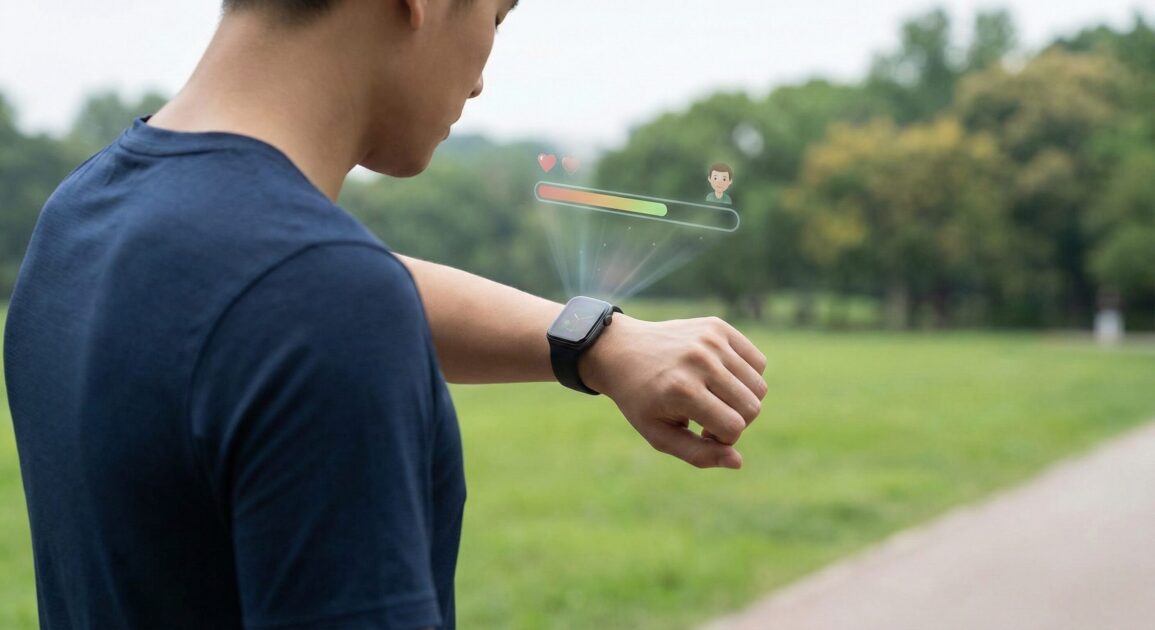
The fitness industry is undergoing a profound transformation, one where the line between physical exertion and digital entertainment is becoming increasingly blurred. This isn’t just about adding a leaderboard to a step counter; it’s a sophisticated application of game design elements to non-game contexts, a practice known as gamification.
By tapping into core human drives, fitness gamification is revolutionizing how we approach health and fitness, making the journey from sedentary to active not only achievable but also enjoyable. This article explores the psychological underpinnings, core mechanics, and future frontiers of this dynamic field, providing actionable insights for professionals looking to create meaningful and engaging fitness experiences.
1. Beyond Points & Badges: The Evolution of Fitness Gamification
The concept of gamification in fitness has evolved far beyond its early days of simple point systems and generic achievement badges. What began as a novelty feature in early health and fitness apps has matured into a foundational design strategy for the entire fitness space. Today’s most successful applications are not just trackers with game layers; they are immersive ecosystems designed to motivate users through a holistic approach to well-being.
From Simple Trackers to Immersive Ecosystems
In the initial wave of digital health, the primary focus was on progress tracking—logging daily steps, calories burned, and distance covered. While useful, this data-centric approach often failed to sustain long-term engagement. The modern fitness experience is a multi-faceted journey that integrates physical activity with mental health, recovery, and nutrition.
Popular health and fitness mobile applications now use gamification to create personal narratives, where the user is the hero of their own health journey. The focus has shifted from raw numbers to the meaning behind them, turning a simple run into a mission and a completed workout into a significant milestone within a larger story.
The Shift to “Holistic” and “Ethical” Engagement
A critical development in 2025 is the industry’s move towards “ethical gamification.” Developers are increasingly aware of the potential for burnout and anxiety associated with overly aggressive gamified features.
The goal is no longer just to keep users coming back at all costs, but to foster healthy habits that improve their health and well-being in a sustainable way. This means designing systems that celebrate rest days as much as activity days and prioritizing long-term retention over short-term, obsessive engagement.
The shift is away from purely competitive leaderboards that can demotivate beginners and towards cooperative challenges where social influence is used to support and lift up the entire community.
2. The Psychology of Movement: Why We Play to Burn
At its core, gamification works because it leverages fundamental principles of human psychology. Understanding these drivers is essential for creating fitness apps that truly motivate users to stick with their routines. It’s not about tricking people into exercising; it’s about aligning the activity with their intrinsic and extrinsic motivations.
Self-Determination Theory (SDT) in Action
A powerful psychological framework applied in fitness gamification is Self-Determination Theory (SDT). SDT posits that human motivation is driven by three basic needs: Autonomy (the feeling of control over one’s actions), Competence (the sense of mastery and progress), and Relatedness (the desire for social connection). Successful gamified fitness apps cater to these needs.
They offer varied fitness goals and paths (Autonomy), provide clear feedback on fitness levels and personal bests through progress tracking (Competence), and facilitate social sharing and friendly competition (Relatedness). When these needs are met, users are more likely to experience intrinsic motivation, finding the activity itself rewarding.
The Octalysis Framework & Core Drives
Another useful model is the Octalysis Framework, which categorizes motivation into eight core drives. Effective fitness gamification balances “White Hat” drives, which feel positive and empowering (like “Epic Meaning & Calling” and “Development & Accomplishment”), with “Black Hat” drives, which create urgency and a fear of loss (like “Scarcity & Impatience” and “Loss & Avoidance”).
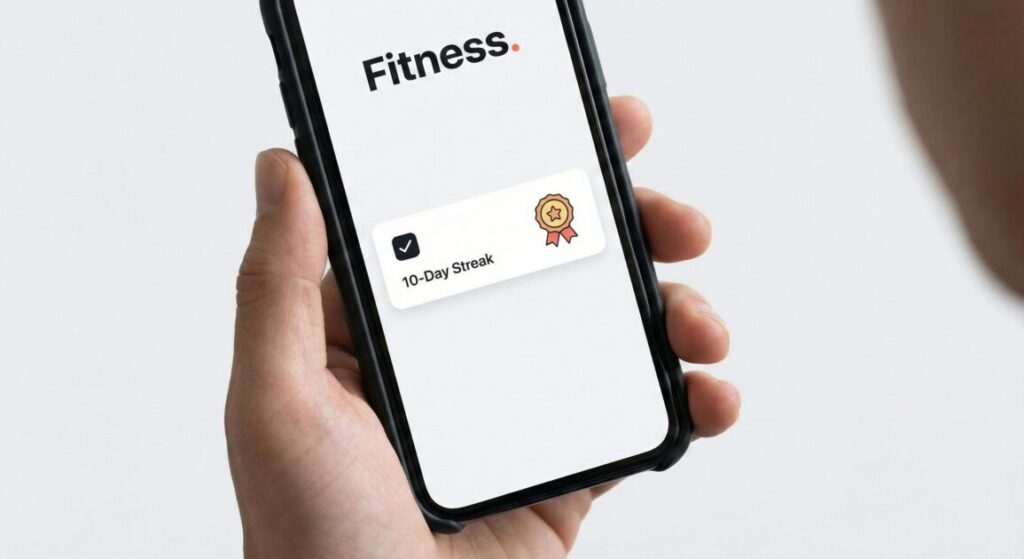
For instance, earning badges for hitting milestones taps into the feeling of accomplishment, while the fear of breaking a daily streak utilizes avoidance logic. A well-designed system uses positive reinforcement to build long-term healthy habits while using scarcity sparingly to provide short-term boosts in engagement.
The “Dark Side”: Obsession, Anxiety, and Burnout
It’s crucial to acknowledge the potential negative consequences of poorly designed gamification. Over-reliance on “Black Hat” motivators like streaks and social comparison can lead to obsessive behaviors, anxiety, and burnout. The pressure to maintain a perfect record can be counterproductive, causing users to disengage entirely if they miss a single day.
Ethical design involves building in flexibility, such as “streak freezes” or “rest day” badges, to ensure that the gamified elements enhance the user experience rather than becoming a source of stress. The goal is to make fitness fun and engaging, not a new source of pressure.
3. Core Mechanics & Design Architecture
The “nuts and bolts” of gamification are the mechanics—the specific tools and features used to create a game-like experience. When implemented thoughtfully, these gamification elements form a powerful architecture that drives engagement and retention.
The “Holy Trinity”: Points, Badges, and Leaderboards (PBL)
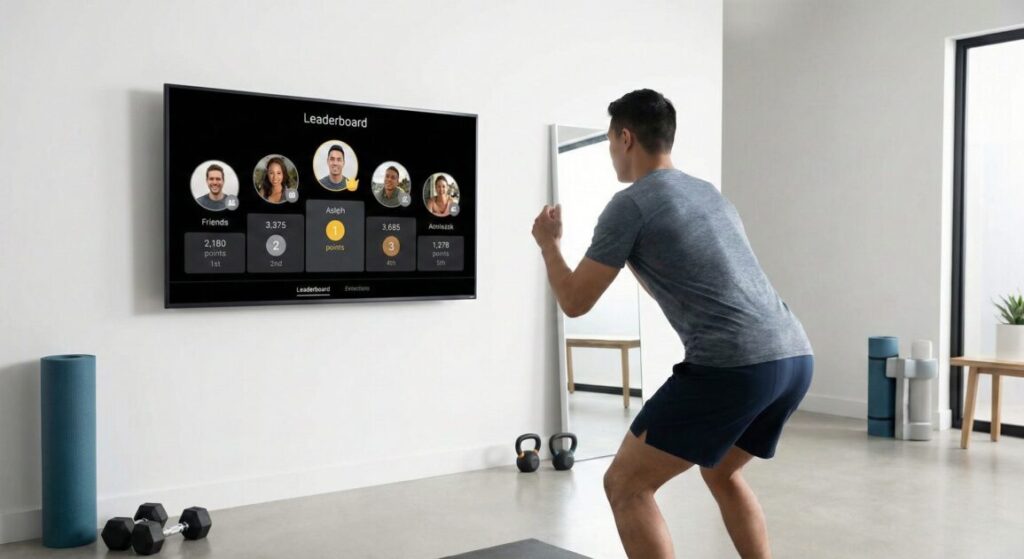
Points, badges, and leaderboards (PBL) are the most commonly used gamification features. However, their effectiveness lies in their nuance. Points should be awarded for meaningful effort, not just passive activity. Badges become valuable when they represent a significant achievement, like completing a first 5K or hitting a monthly step count target, rather than just for logging in.
Leaderboards, while popular for fostering friendly competition, can be demotivating if they compare a beginner to a professional athlete. Modern apps are moving towards “smart leaderboards” that segment users by fitness levels, or private leaderboards among friends, making the competition fair and relevant.
Designing for Retention: Streaks and Progress Loops
Streaks are one of the most powerful tools for encouraging daily engagement. Seeing a number grow day after day creates a strong psychological anchor, motivating users to return to complete a workout just to keep the streak alive. This is often tied to a “progress loop,” where small, daily actions contribute to larger, long-term fitness goals.
A visual progress bar filling up or a virtual avatar leveling up provides a tangible sense of advancement, reinforcing the habit loop and increasing motivation.
Social Mechanics: Competition vs. Cooperation
Social influence is a key driver in fitness. While direct competition on leaderboards works for some, many users are more motivated by cooperation and community. Features that allow users to join “squads” or teams to achieve a collective goal—like walking a combined distance to a virtual landmark—foster a sense of shared accountability and belonging.
This collaborative approach can be far more effective for long-term engagement and retention than cutthroat competition, as it reduces performance anxiety and builds a supportive network.
4. Case Studies: Who Is Doing It Right?
Several companies have successfully mastered the art of gamifying fitness, each with a unique approach that has resonated with millions of users.
Strava: The Social Network for Athletes
Strava has become the go-to platform for cyclists and runners by perfectly blending robust fitness tracking with social networking. Its “Segments” feature turns any stretch of road or trail into a virtual racetrack, allowing users to compete for “King/Queen of the Mountain” titles against others who have completed the same path.
The “Kudos” system provides simple yet effective positive reinforcement from peers, transforming a solitary workout into a socially validated achievement.
Zombies, Run! & Peloton Lanebreak: Immersive Narratives
For those who find traditional workouts monotonous, immersive narratives offer a compelling alternative. Apps like “Zombies, Run!” turn a jog into a survival mission, where the user is the hero running from a zombie horde, with audio cues and a gripping story delivered through headphones.
Similarly, Peloton’s “Lanebreak” gamifies cardio by turning a stationary bike ride into a rhythm-based game. Users control a rolling wheel on a digital track, changing lanes and resistance to match the beat of the music and hit targets. These examples show how a strong narrative or game mechanic can completely mask the effort of physical activity.
StepN & The Evolution of “Move-to-Earn”
The “Move-to-Earn” model, popularized by apps like StepN, introduced a direct financial incentive to fitness. Users purchase NFT sneakers and earn cryptocurrency by walking or running. While the initial hype was driven by the promise of financial return, the model is evolving towards more sustainable rewards.
The focus is shifting from “get rich quick” schemes to using earned points for charity donations, discounts on gear, or other tangible perks, aligning financial incentives with genuine health goals.
5. The Future Frontiers: AI, VR, and Mixed Reality
As technology advances, the future of fitness gamification lies in even more personalized and immersive experiences powered by artificial intelligence and mixed reality.
Generative AI: The Infinite Personal Trainer
Generative AI is set to revolutionize personalization. Instead of static workout plans, imagine an AI coach that analyzes your daily recovery data, sleep quality, and stress levels to generate a custom workout on the fly. AI can also create dynamic, personalized storylines for narrative-based apps, where the plot adapts to your performance, ensuring a unique experience every time.
This level of personalization can significantly enhance engagement by ensuring the challenge always matches the user’s current capabilities.
Mixed Reality: Fitness in the Age of Quest 3 & Vision Pro
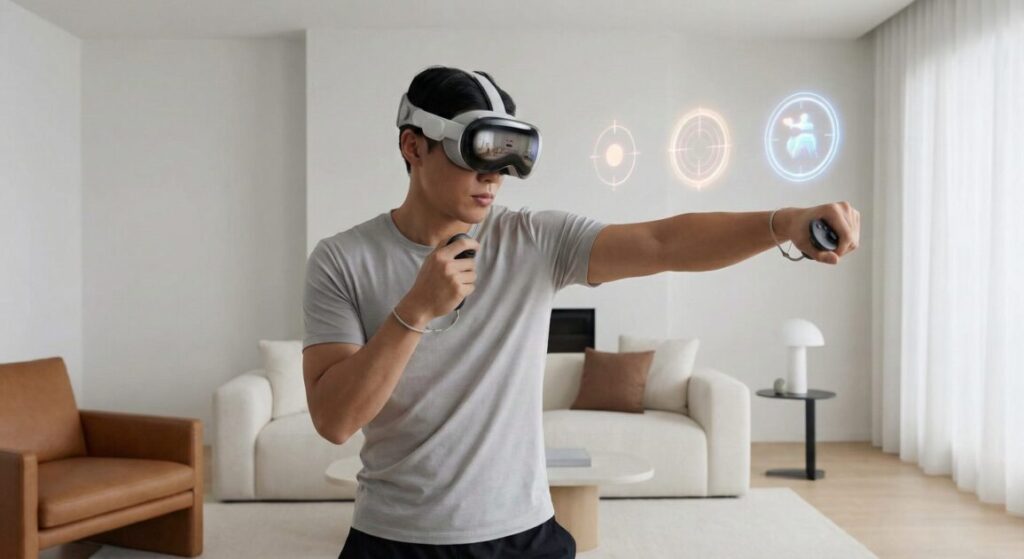
The rise of mixed reality (MR) headsets like the Meta Quest 3 and Apple Vision Pro is solving the isolation problem of traditional virtual reality fitness. With pass-through technology, users can see their real-world surroundings while interacting with digital game elements.
This means you can box against a virtual opponent in your living room without the fear of punching a wall or do a dance workout with virtual instructors while still being present in your physical space. This blend of the real and virtual worlds promises to make home fitness more accessible, safe, and incredibly fun.
6. Implementation Strategy: A Checklist for Professionals
For those looking to implement gamification in health and fitness, a strategic approach is crucial for success.
Balancing Intrinsic and Extrinsic Motivation
The golden rule of ethical gamification is that it should amplify the intrinsic value of the activity, not replace it. Extrinsic rewards like badges and points are excellent for getting a user to start, but intrinsic motivation—the joy of movement, the feeling of getting stronger, the social connection—is what keeps them going long-term.
A successful strategy uses game mechanics to guide users toward discovering these intrinsic rewards, eventually making the external drivers less necessary.
Data-Driven Personalization
In the era of wearables and gym trackers, leveraging data is key. A one-size-fits-all approach to gamification is destined to fail. Use data to personalize goals, adjust difficulty levels, and provide relevant feedback.
A system that recognizes when a user is fatigued and suggests a recovery session is far more effective and sustainable than one that blindly pushes them to “keep the streak alive” at all costs. By focusing on healthy design principles—transparency, flexibility, and meaningful social connection—professionals can build gamified fitness experiences that truly improve lives.