
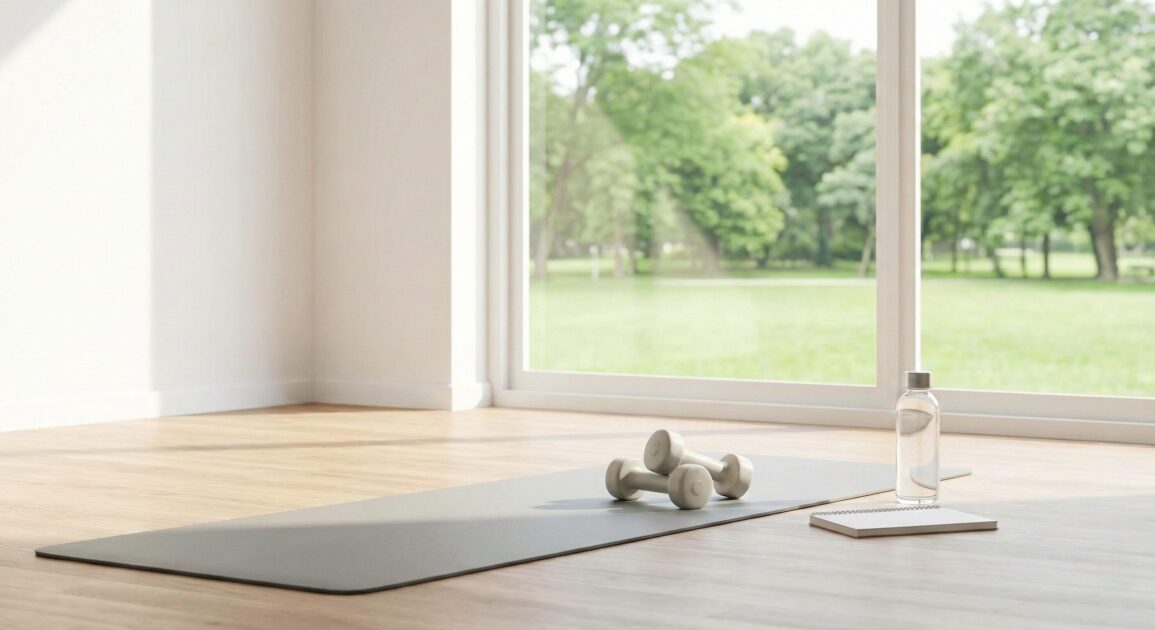
Embarking on a fitness journey can be one of the most rewarding decisions you ever make. A well-structured 30-day fitness challenge provides the perfect framework for beginners to build healthy habits, improve body composition, and discover the joy of movement.
This comprehensive guide will walk you through a complete 30-day program, from setting your initial fitness goals to completing your very next workout with confidence. We’ve designed this workout plan to be an easy-to-follow, great workout that will challenge you without being overwhelming. Get ready to transform your body over the next 30 days!
Preparing for Your 30-Day Fitness Journey
Before you jump into your first month of exercise, a little preparation can make a huge difference. This section is all about setting the stage for a successful 30-day challenge.
Setting Realistic Goals and Tracking Progress
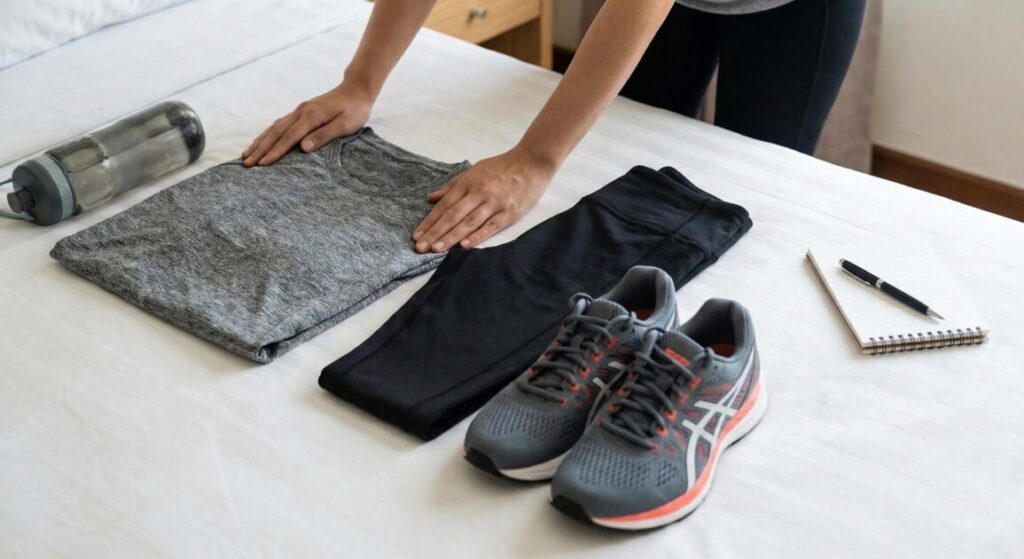
The first step is to define clear, attainable goals. Instead of aiming for drastic changes, focus on achievable milestones like completing every scheduled workout or being able to do more reps of a certain exercise by week 2. To keep yourself accountable, consider using a journal to track your daily workouts, how you feel, and any improvements in your endurance. Seeing your progress on paper is a powerful way to stay motivated throughout the 30 day challenges.
Essential Gear for a Home Workout
You don’t need a fancy gym membership to get a solid workout. A great home workout can be done with minimal equipment. For this 30-day beginner workout plan, we recommend having a comfortable mat, a pair of light dumbbells for strength training, and a good pair of athletic shoes. As you progress, you might explore other tools, but these basics are perfect for getting started with exercise.
Understanding the Importance of Warm-ups and Cool-downs
Never skip your warm-up! A 5-10 minute session of light cardio and dynamic stretching prepares your body for the work ahead by raising your heart rate and increasing blood flow to the muscles in your body. Similarly, a cool-down with static stretches helps with recovery and flexibility. These simple steps are crucial for preventing injury and ensuring you can stick with the program.
Structuring Your 30-Day Workout Challenge
A well-designed workout schedule is the backbone of any successful fitness routine. This plan balances different types of training to provide a comprehensive full body workout while allowing for adequate recovery.
The Weekly Schedule Breakdown
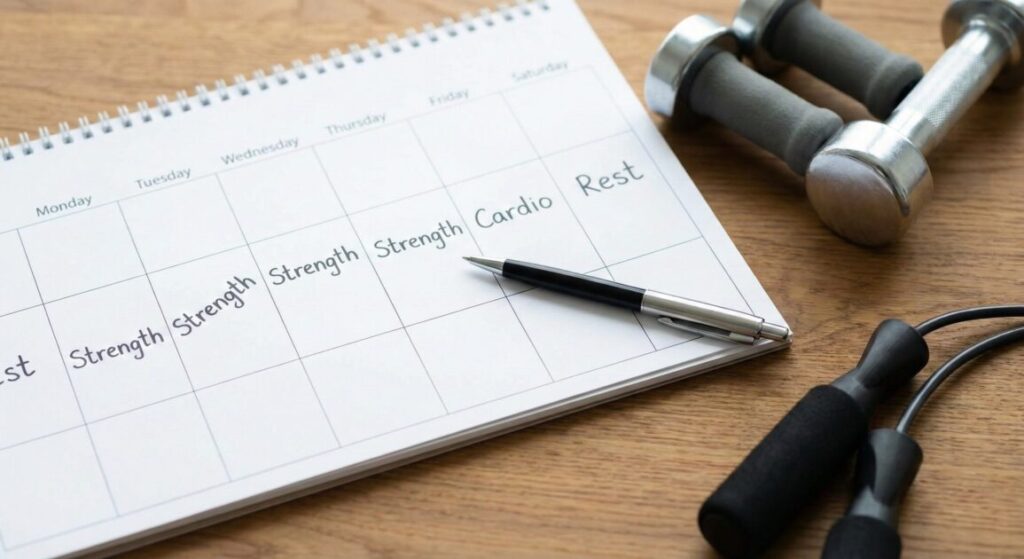
For week 1, we’ll start with a manageable rhythm. A common and effective structure is to exercise for three days, take a rest day, exercise for two more days, and then take another rest day. This ensures you’re active most of the week but also gives your body time to recover. As your fitness level improves, you can adjust the frequency, but for now, aiming for at least one solid rest day per week is key.
Balancing Cardio, Strength, and Flexibility
A complete fitness program incorporates multiple elements. We’ll alternate between strength workouts that focus on building muscle and cardio workouts to improve your heart health and stamina. You might also weave in a low-impact session like pilates or yoga to enhance flexibility. This variety keeps things interesting and ensures you’re targeting every muscle group.
The Critical Role of Rest Days
Rest days are not lazy days; they are a vital part of your workout program. During rest, your muscles repair and grow stronger. Neglecting rest can lead to burnout or injury. So, listen to your body and don’t hesitate to take an extra rest day if you’re feeling exceptionally sore or fatigued. The goal is to make fitness a sustainable part of your life, not a short-term punishment.
Sample Workout Routines for Beginners
Here are some examples of the types of workouts you’ll be doing. Remember, the key is proper form over the number of reps. If you’re unsure, consider consulting a personal trainer or joining group fitness classes to learn the basics.

Full-Body Strength Training Focus
A full body strength routine is excellent for beginners. It allows you to work multiple muscle groups in a single session. Your routine might include bodyweight staples like squats, push ups (modified on knees if needed), and lunges, along with a simple dumbbell workout for your arms and shoulders. Aim to challenge your muscles with 2-3 sets of 10-12 repetitions for each exercise, focusing on good form.
Introduction to HIIT and Cardio
To boost your cardiovascular health, we’ll introduce some basic interval training. A beginner HIIT workout might involve alternating between 30 seconds of a more intense activity like marching in place or jumping jacks, followed by 30 seconds of rest. Repeating this cycle for 15-20 minutes is a time-efficient and highly effective cardio workout.
Core and Ab Specific Workouts
A strong core is essential for overall stability and preventing back pain. You can dedicate a short session or part of your strength workout to an ab challenge. Simple but effective moves like planks, crunches, and bird-dogs will help you build a solid foundation.
Tips for Success and Staying Motivated
The physical part of the challenge is only half the battle; the mental aspect is just as important. Here’s how to keep your head in the game and reach your fitness goals.
Finding Your “Why”
Why did you decide to start this 30-day challenge? Maybe you want to feel more energetic, fit into an old pair of jeans, or set a good example for your family. Whatever your reason, write it down and keep it visible. Remembering your “why” will help you push through when you don’t feel like doing that next workout.
Listening to Your Body and Making Adjustments
Your body provides the best feedback. If a new exercise causes sharp pain, stop immediately. If you’re feeling completely drained, a light walk might be a better option than a high-intensity session. It’s okay to modify the workout plan as needed. The goal is to complete the workout, not to be perfect. This flexibility will help you avoid injury and keep going for the next 30 days and beyond.
Celebrating Non-Scale Victories
Don’t get hung up on the number on the scale. Your body composition is changing in ways that a scale can’t always measure. Celebrate other victories: feeling stronger, having more energy during the day, sleeping better, or being able to do exercises like squats with better form. These are all signs that your new fitness routine is working.
By the end of this 30-day program, you’ll have built a solid foundation for a lifelong fitness journey. You’ll be stronger, more confident, and ready to take on whatever new workout or wellness program comes next. So, lace up your shoes, take a deep breath, and let’s get started on your body 30 day workout challenge!