

At its core, a fitness philosophy is a set of guiding principles and beliefs about physical fitness and its role in your life. It’s more than just a workout plan or a list of fitness goals; it is the “why” behind the “what” and “how” of your training.
This philosophy can be a powerful tool, providing direction, motivation, and a deeper understanding of fitness that transcends the superficial goals often promoted by the fitness industry.
A well-defined fitness philosophy can help you navigate the countless options for physical activity and make choices that align with your values, leading to a more sustainable and fulfilling fitness journey. It turns physical training from a chore into a meaningful practice of self-cultivation.
The Ancient Roots of Physical and Mental Cultivation
The idea of a fitness philosophy is not a modern invention. The concept of harmonizing mind and body through physical education and philosophy has deep roots in ancient civilizations.
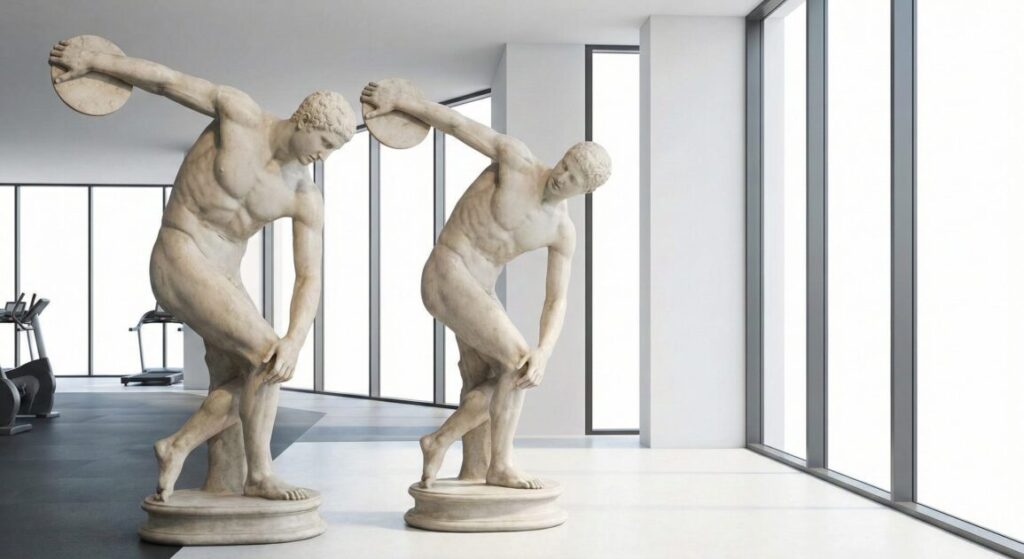
Plato and the Balanced Life
Plato, a foundational figure in Western philosophy, was a strong advocate for a balanced approach to life. In his work The Republic, he argued that physical education (gymnastic) and intellectual education (music) must be pursued together.
He believed that an exclusive focus on the physical could lead to brutality, while an exclusive focus on the intellect could lead to softness. For Plato, the goal was a well-rounded individual where physical training served to develop the body as a suitable vessel for the mind, fostering both strength and beauty.
Aristotle on Virtue and Habit
Plato’s student, Aristotle, also saw a connection between physical exercise and the good life. He believed that virtue is acquired through habit, and this principle applies to physical aspects as well.
By consistently engaging in physical activity, one develops not only physical health but also virtues such as fortitude and endurance. For Aristotle, the active life was a key component of overall wellbeing, and physical training was a practical way to cultivate the virtues necessary for a flourishing life.
Modern Interpretations and Individualized Approaches
While ancient wisdom provides a strong foundation, modern understandings of fitness have expanded to include a vast array of practices and philosophies. The contemporary fitness landscape offers something for everyone, allowing for a highly individualized approach.

From Strength to Holistic Wellness
Today, a fitness routine can encompass everything from heavy strength training with a barbell to mindful yoga. Some may find their philosophy rooted in the raw power of a deadlift or squat, finding a sense of accomplishment and resilience in overcoming physical resistance.
For others, a holistic approach that combines cardiovascular exercise, flexibility, and mental wellness is key to a healthy life. The rise of personal training has also highlighted the importance of tailoring programs to an individual’s unique fitness level, goals, and needs.
Philosophical Perspectives on the Body
Modern thinkers have also contributed to our understanding of the body and physical existence. For instance, Friedrich Nietzsche emphasized the importance of the body and its instincts, challenging the traditional mind-body duality.
Martin Heidegger’s philosophy of “being-in-the-world” can be interpreted to suggest that our physical engagement with the world through action and movement is fundamental to our existence.
These philosophical perspectives can enrich our understanding of fitness, reinforcing the idea that thinking about fitness is as important as the doing.
The Role of Virtue, Discipline, and Personal Responsibility
Ultimately, a fitness philosophy is a personal code of conduct. It is about cultivating virtues that extend beyond the gym walls and into every aspect of your life.

Cultivating Inner Strength
The discipline required to maintain a consistent fitness routine is a powerful form of self-mastery. It teaches you to show up for yourself, even when it’s difficult, fostering a sense of personal responsibility.
This internal fortitude, forged through physical effort, can be applied to challenges in your career, relationships, and personal growth. The ancient philosophy of Stoicism, with its emphasis on endurance and control over one’s reactions, offers a complementary framework for a fitness philosophy that values inner strength as much as physical prowess.
Fitness as a Lifelong Journey
Embracing a fitness philosophy means viewing fitness not as a destination but as a continuous journey of self-discovery and improvement. It’s about understanding that your fitness goals and needs will evolve over time, and your philosophy should be flexible enough to adapt.
A well-rounded approach that values physical health, mental clarity, and emotional wellbeing will serve you best in the long run. A personal trainer or mentor can be a valuable guide on this journey, helping you to refine your technique, stay accountable, and deepen your understanding of fitness.
Crafting Your Own Fitness Philosophy
Developing your own fitness philosophy is a deeply personal process. It requires introspection, experimentation, and a willingness to learn.

Start by asking yourself some fundamental questions: “What’s your fitness philosophy?” “Why do I want to be fit?” “What role does physical activity play in my life?” “What values do I want to embody through my training?”
Reflect on the teachings of philosophers like Plato and Aristotle, consider the diverse approaches of the modern fitness industry, and then forge a path that is uniquely yours. Your philosophy should be a source of inspiration, a compass to guide you, and a foundation for a lifetime of physical and mental wellbeing.
Remember that fitness requires not just physical effort but also mental engagement, and a thoughtful philosophy can be the key to unlocking your full potential.